
The Difference you can see
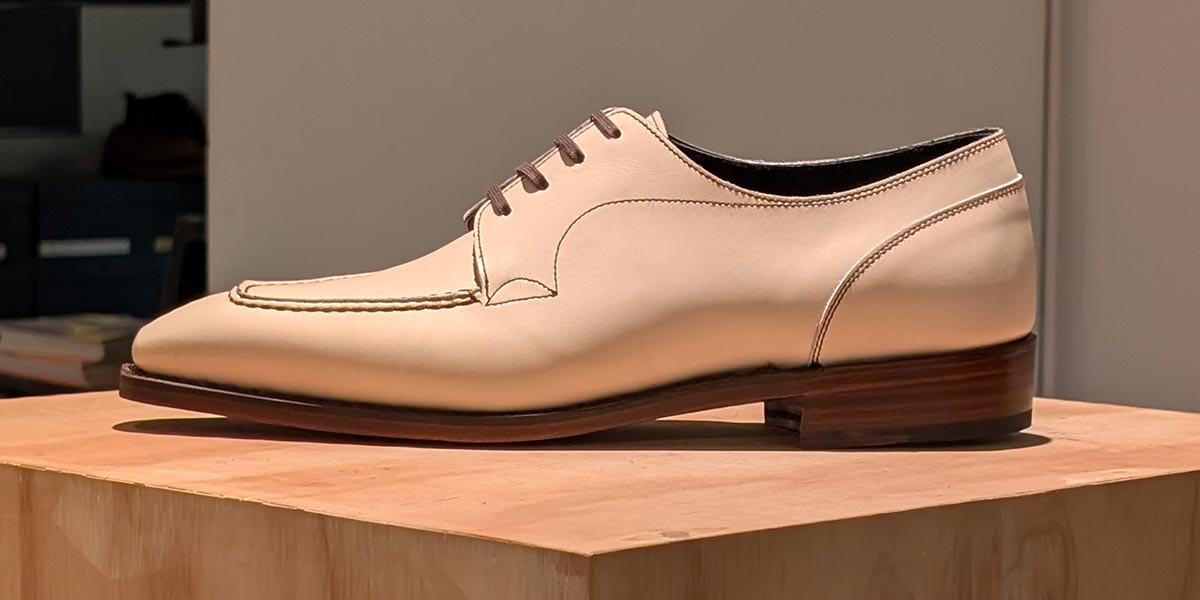
Before
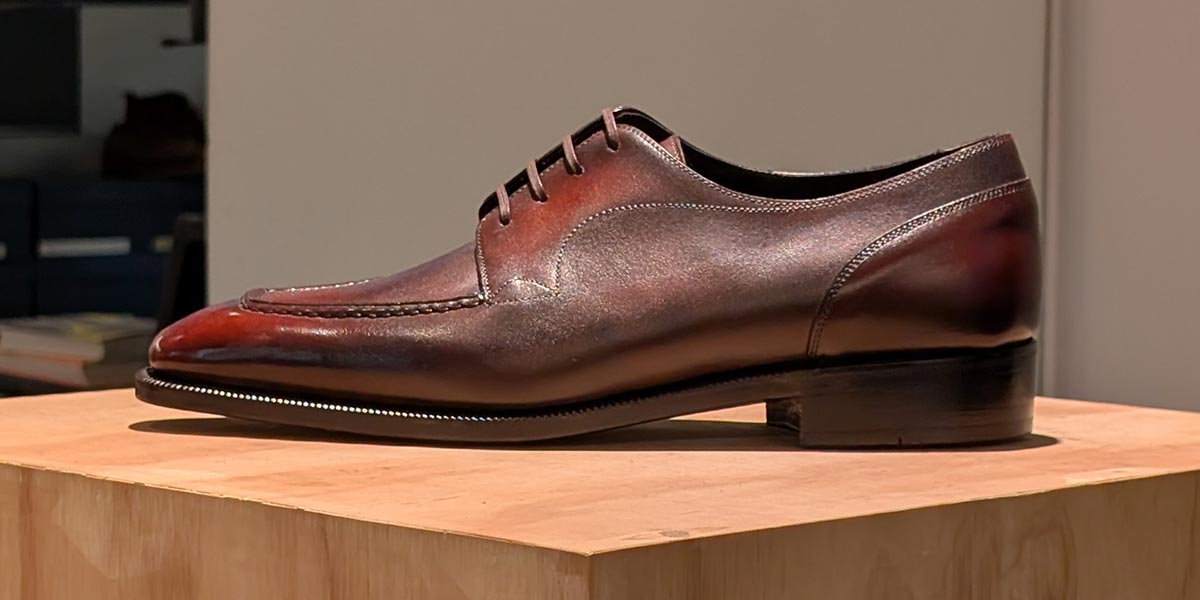
After
Some details reveal themselves slowly. Others are visible the moment you walk into a room. Hand finishing belongs to the second category.
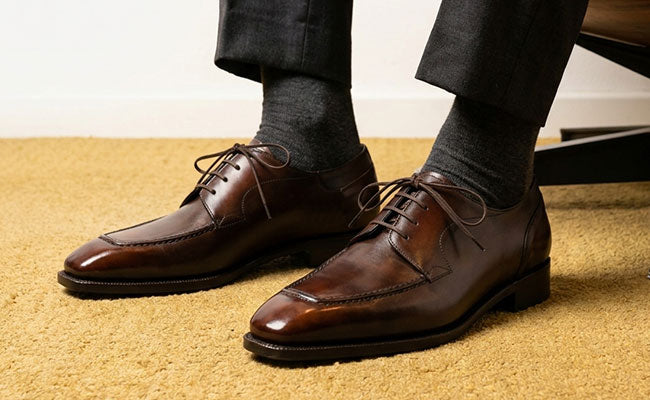
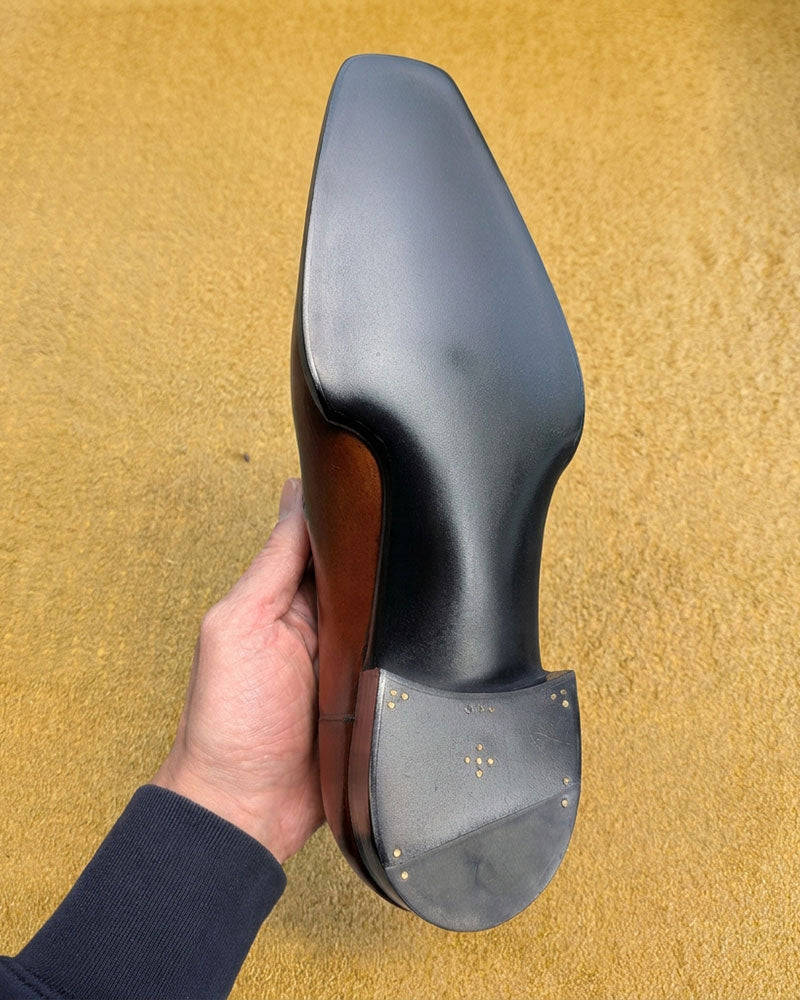
Many people notice it immediately, even if they cannot explain exactly what they are seeing. The edges of the sole appear cleaner. The heel seems more sculpted. The colors have more depth. Light reflects differently across the surface of the shoe.
Most people simply describe the result as looking more refined. What they are seeing is the effect of hand finishing.
Before Shoes Became Industrial
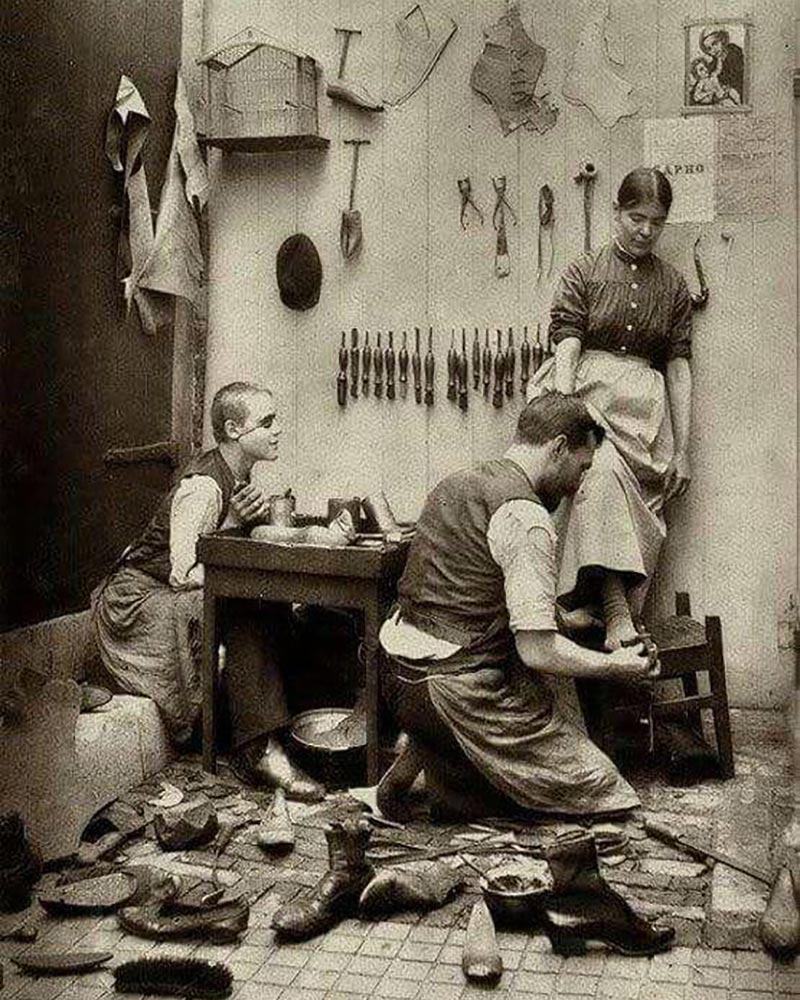
For centuries, every shoe was finished by hand.
After a shoe was made, a craftsman would spend hours refining the shape of the sole, compressing the leather, polishing the edges, and creating a finish that protected the shoe from daily wear. This work was not considered decoration. It was simply part of making a well-made shoe.
As production became increasingly industrialized during the twentieth century, much of this work disappeared. Machines allowed shoes to be produced faster and more consistently, but many of the final operations that once defined high-end shoemaking were gradually reduced or eliminated.
Today, most ready-made shoes receive only minimal finishing after construction. The result is perfectly functional. But it rarely possesses the depth, character, and refinement associated with traditional shoemaking.
Bringing Bespoke Techniques to Ready-Made Shoes
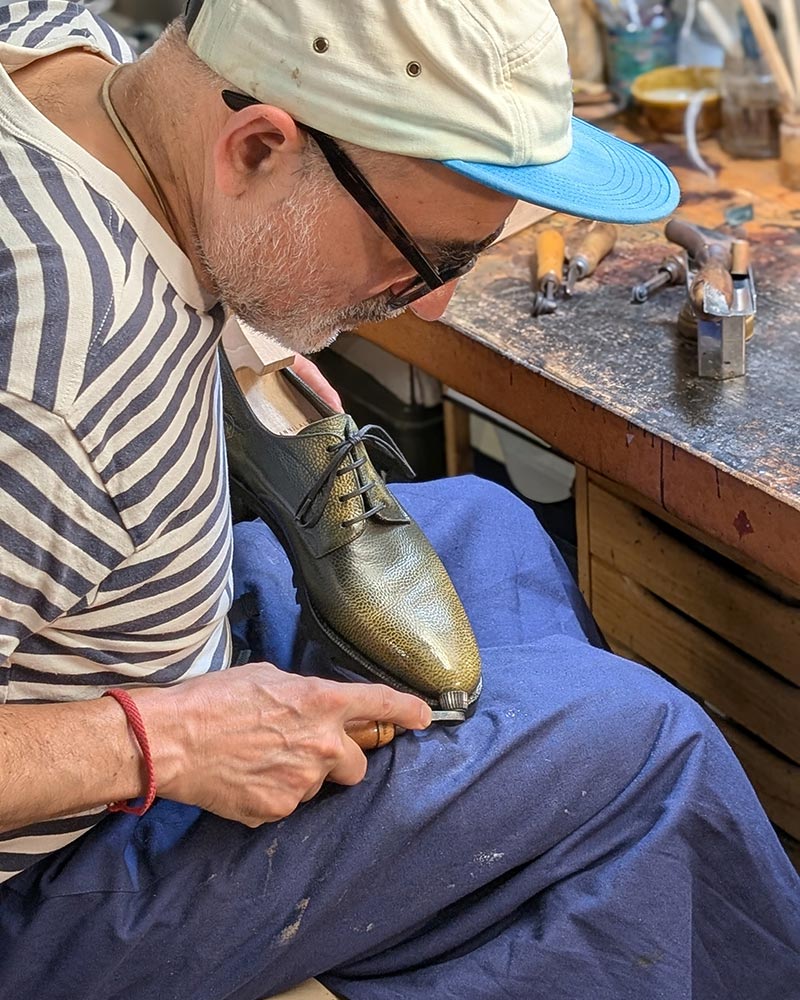
Before launching the Condal Collection, Norman spent years making bespoke shoes in Barcelona.
When developing his ready-made collection, he did not want to simply produce another interpretation of the classic Oxford or Derby. There were already many brands doing that well.
Instead, he asked a different question: What would happen if the finishing standards of bespoke shoemaking were applied to a ready-made shoe?
The answer became one of the defining characteristics of our work.
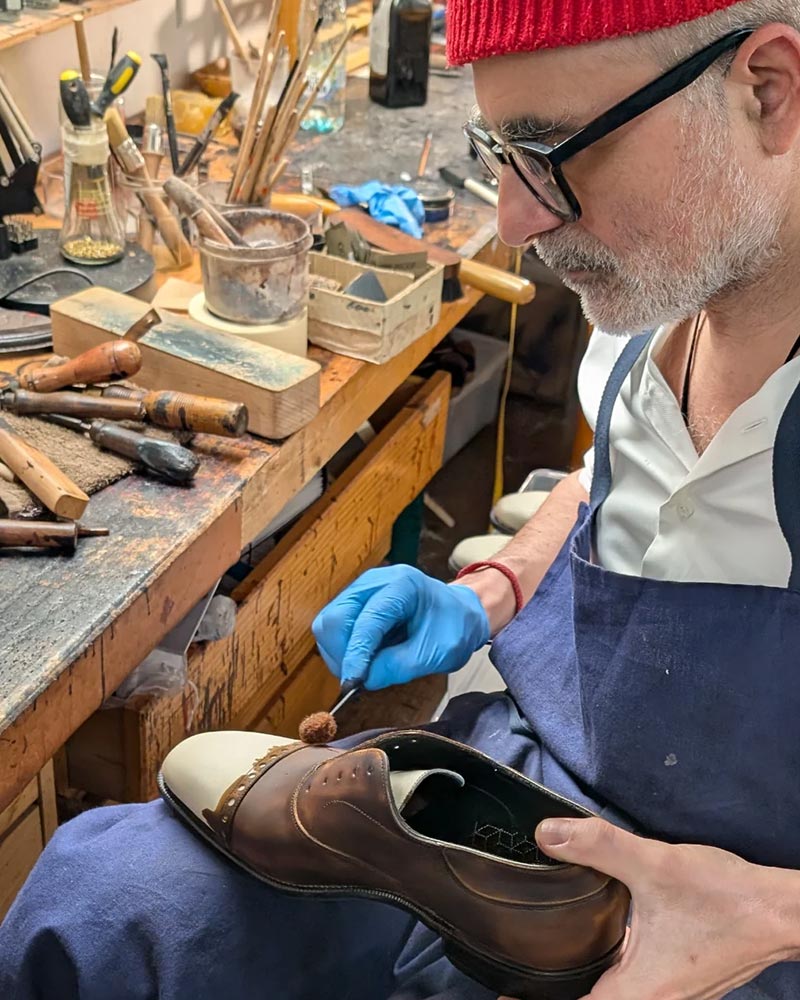
Every pair in the Condal Collection undergoes hours of hand finishing in our Barcelona workshop after the shoe has already been constructed.
It is one of the final stages of production, but one of the most visible.
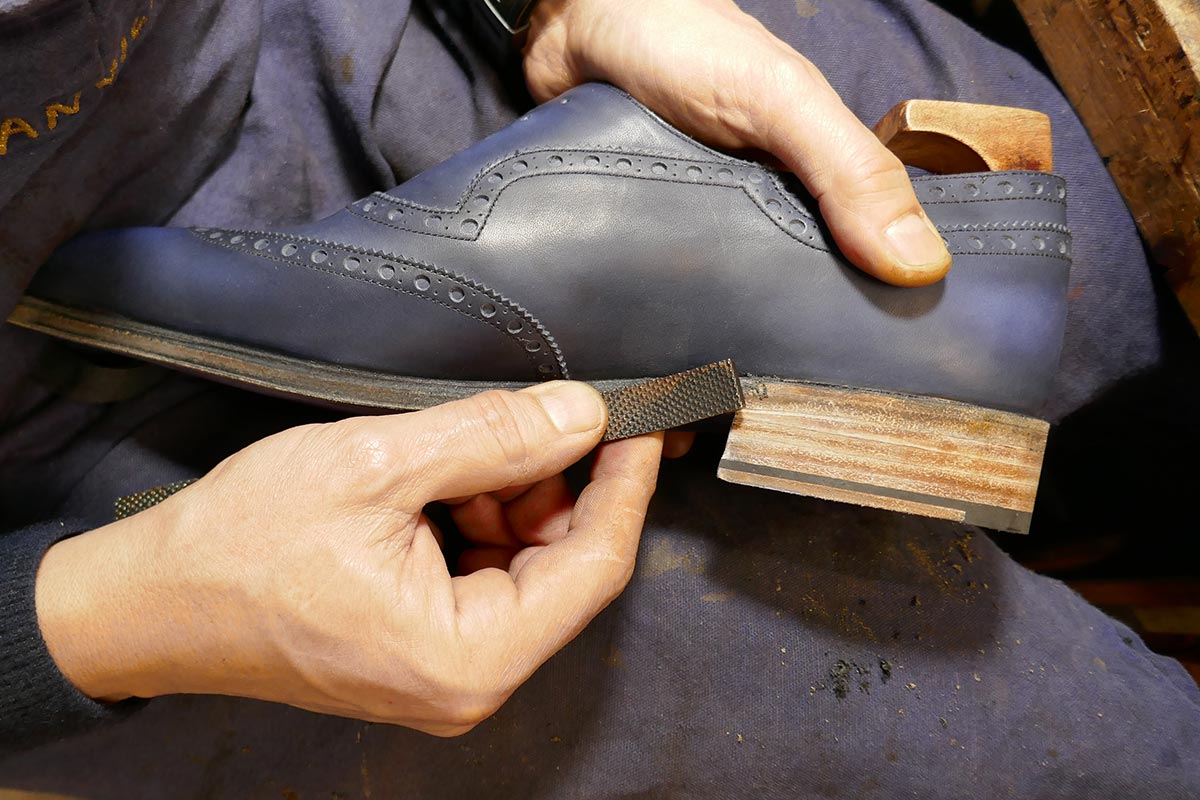
Sculpting Rather Than Manufacturing
Hand finishing is often associated with color. While our handmade patinas are certainly part of the process, finishing begins long before any dye touches the shoe.
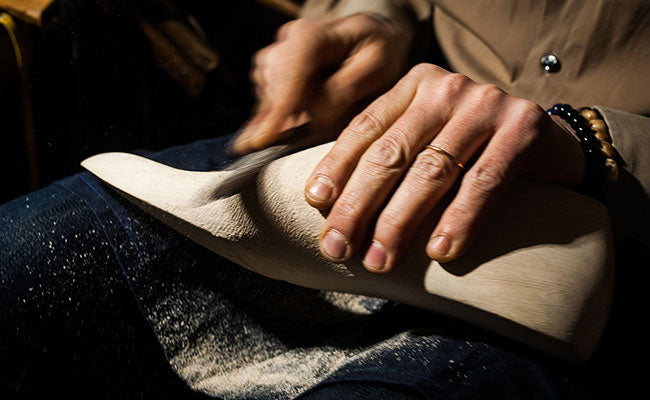
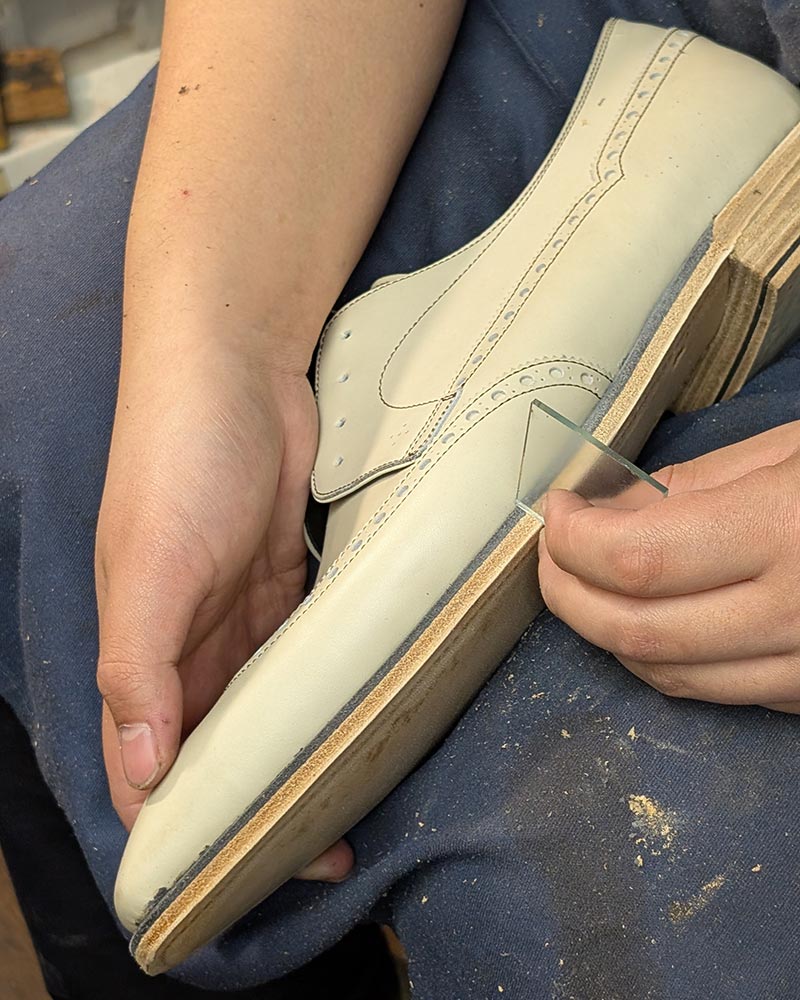
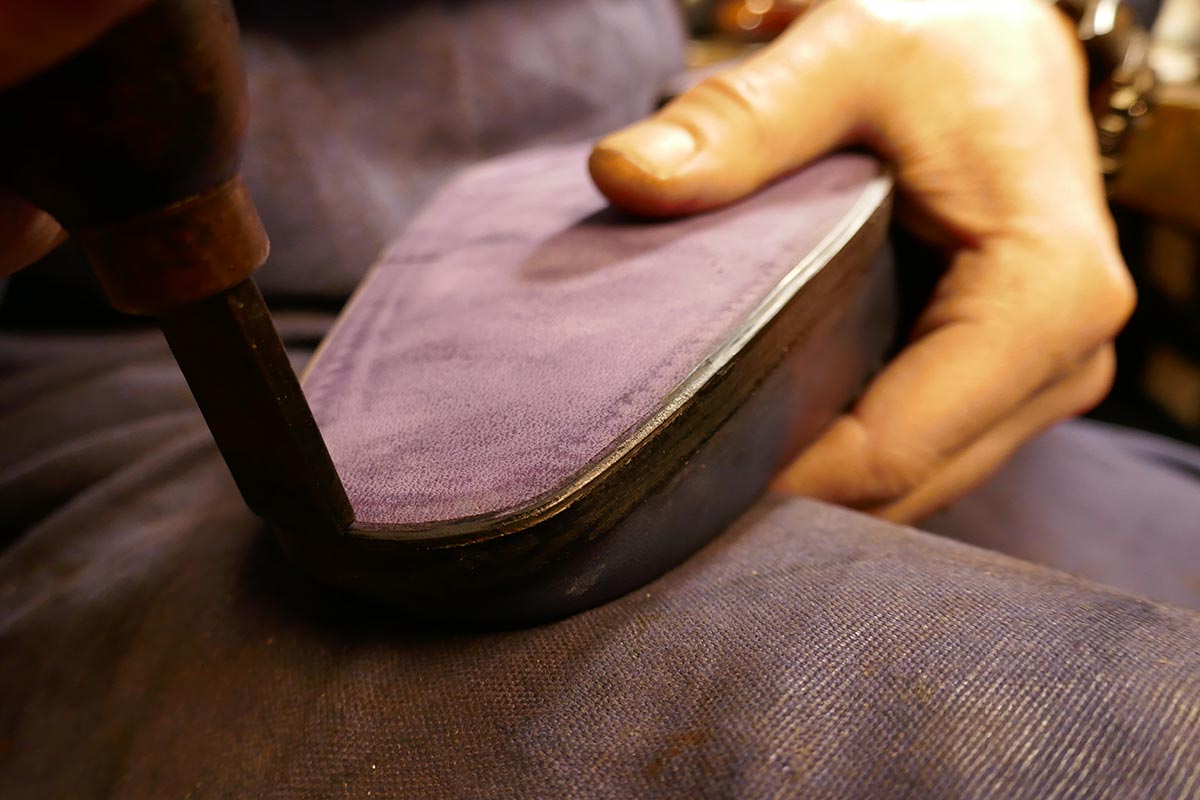
The sole and heel are carefully shaped by hand to create a cleaner silhouette. The edges are refined, compressed, and polished using traditional techniques that have changed little over generations.
The goal is not simply to make the shoe look beautiful. It is to create harmony between every part of the design.
The upper, sole, heel, and waist should feel as though they belong together rather than appearing as separate components assembled by a machine. Much like a sculptor removes material to reveal the final form, hand finishing allows the final shape of the shoe to emerge.
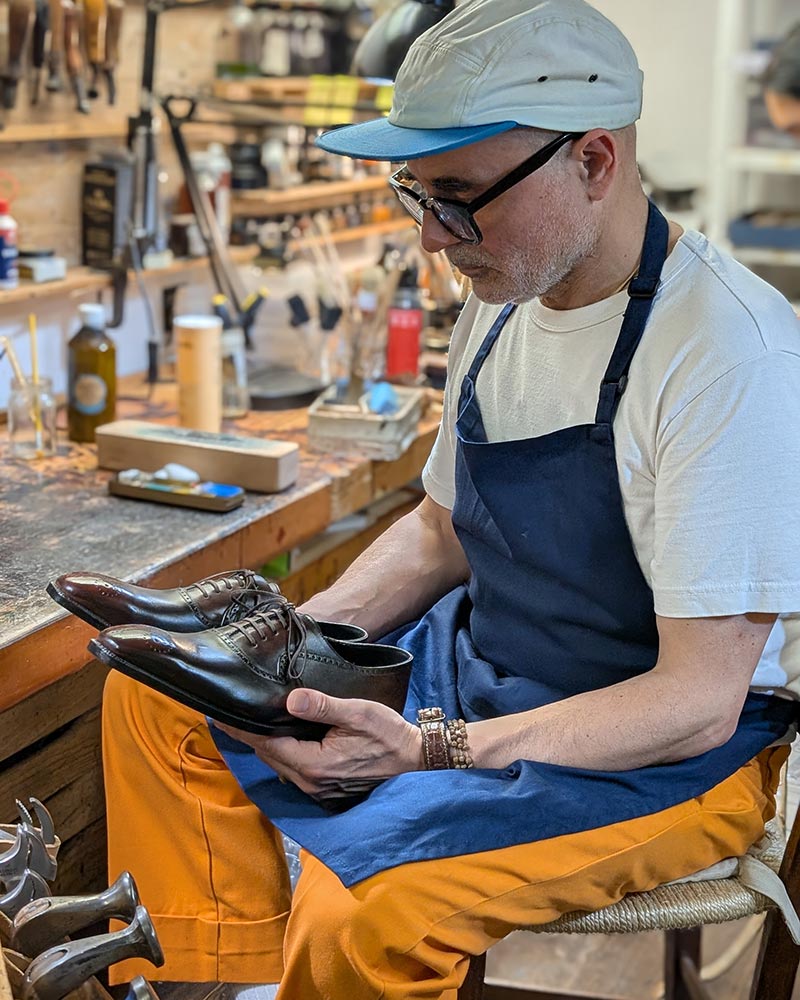
The Human Eye and Hand
Many stages of shoemaking can be measured. Hand finishing cannot.
The process relies heavily on two tools that cannot be replaced by machinery: The eye and the hand.
An experienced finisher develops the ability to see subtle irregularities in shape and proportion.
Equally important is touch. A skilled finisher can often feel imperfections before they become visible.
This sensitivity guides every stage of the process, from shaping and sanding to polishing and coloring. It is one of the reasons hand finishing remains difficult to replicate through automation.
Machines excel at consistency. Hand finishing excels at judgment.
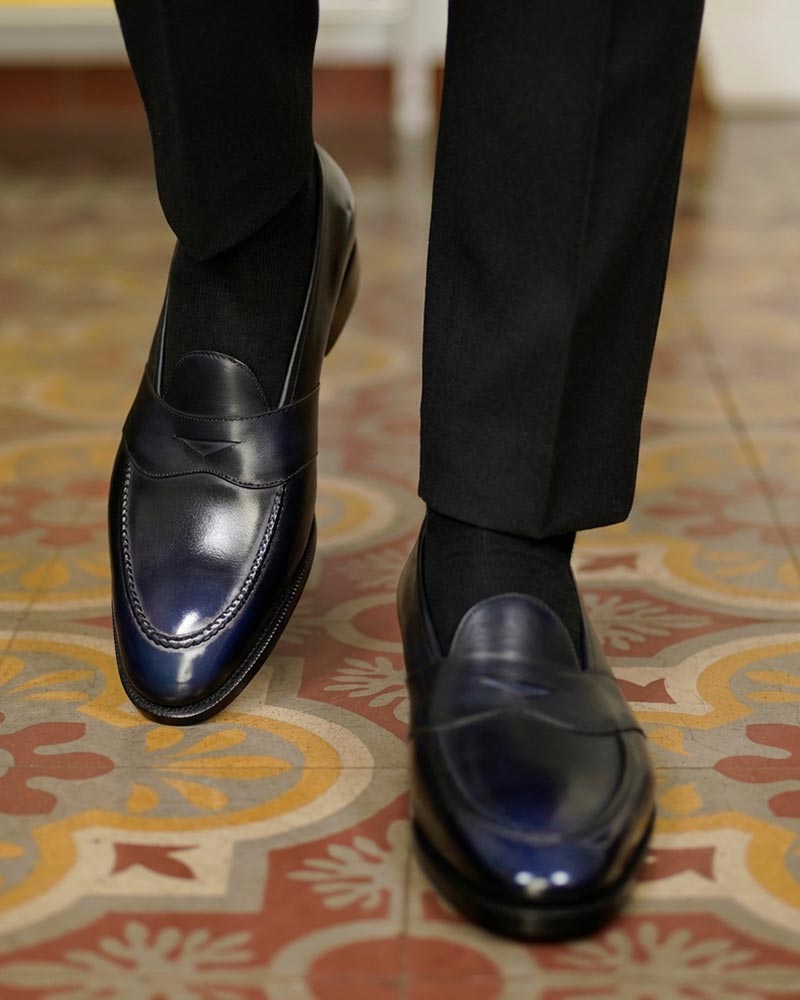
Why Depth Matters
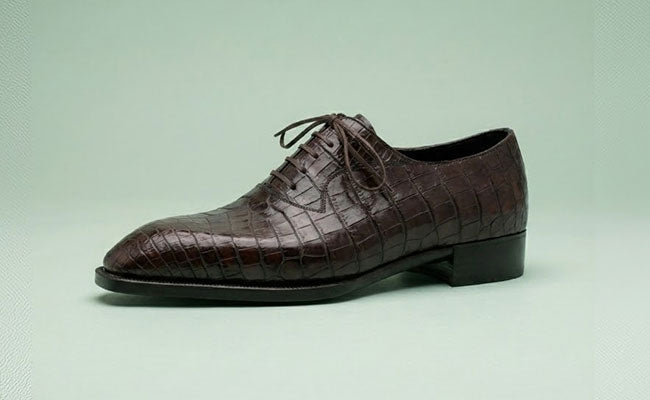
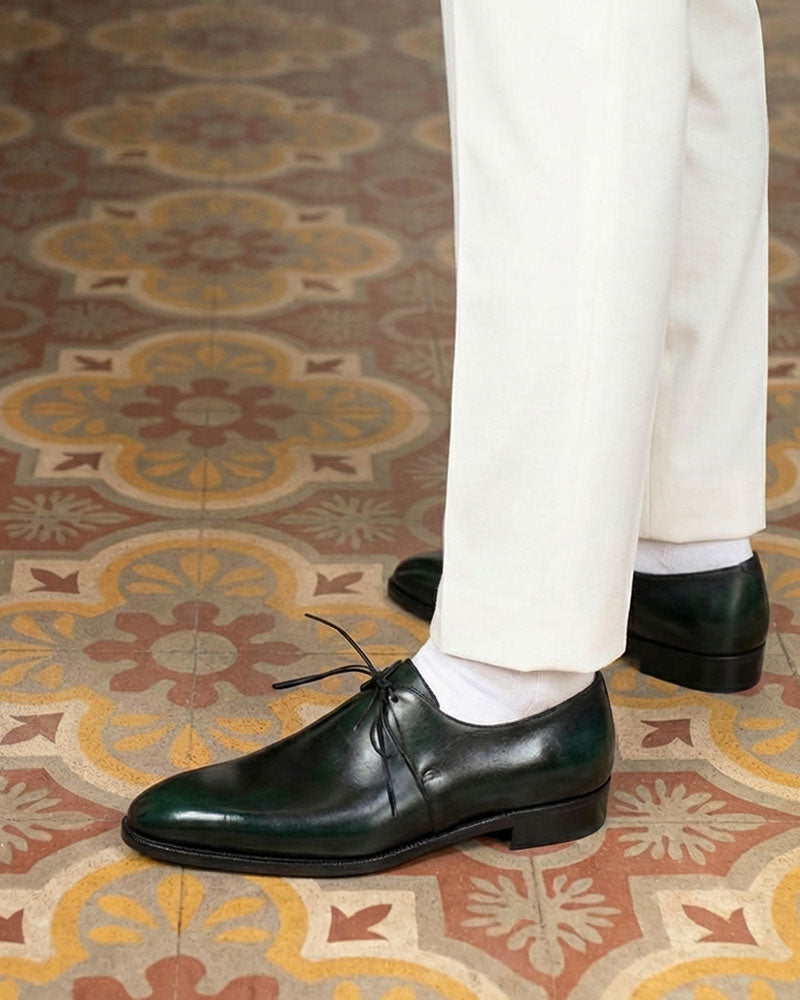
One of the most recognizable aspects of Norman Vilalta shoes is the depth of color.
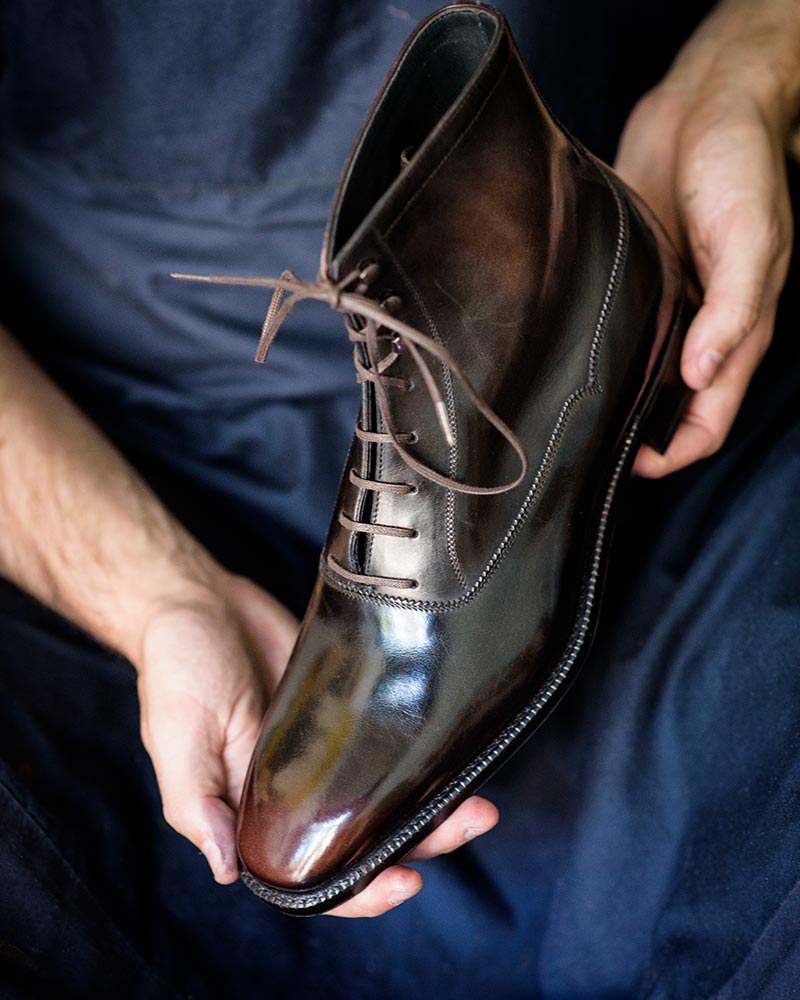
Unlike factory-applied finishes that are sprayed in a single uniform layer, our finishing process involves multiple applications of dyes, creams, waxes, and pigments.
Each layer interacts differently with the leather. The result is a finish that changes with light and movement.
The shoe reveals different tones throughout the day, creating a richness that cannot be achieved through a single industrial application.
No two pairs are ever exactly alike. The subtle variations are evidence of the human hand behind the work.
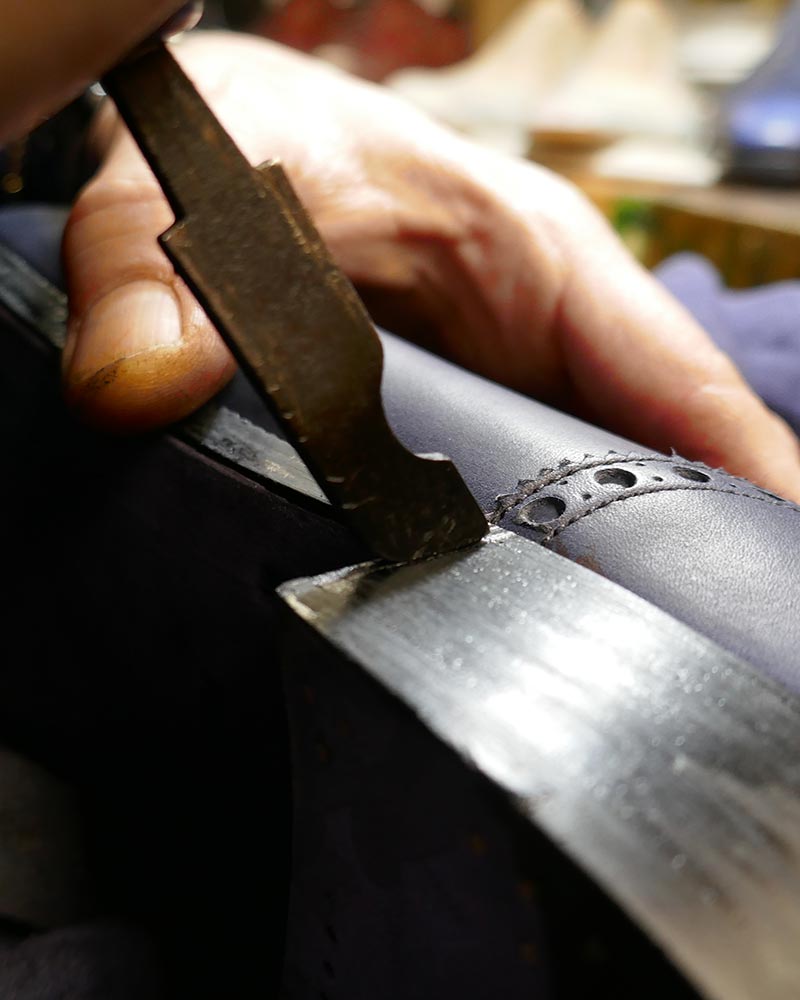
More than Appearance
Hand finishing certainly makes a shoe more beautiful. But historically it was never only about appearance.
The process helps seal and protect the leather, strengthens vulnerable areas around the sole and heel, and creates surfaces that age more gracefully over time.
Many of the techniques developed by traditional shoemakers were practical solutions long before they became visual signatures.
The beauty is a consequence of doing the work properly.
The Difference You Notice Without Realizing
Many customers first discover our shoes through the design. The distinctive silhouettes. The pitched heel. The asymmetric pattern.
Yet hand finishing is often the detail that creates the strongest emotional response.
People may not immediately identify why the shoe feels different. They simply recognize that it possesses a level of depth and refinement they do not normally encounter.
That reaction is precisely why we continue to finish our shoes by hand.
Not because it is faster. Not because it is easier.
But because some qualities can only be achieved when skilled hands remain part of the process.
The Norman Vilalta Difference
Today, every pair from our Condal Collection continues to be hand finished in Barcelona.
The process requires hours of additional work after construction is complete.
It is one of the least efficient parts of making a shoe. It is also one of the most important.
Because when a shoe is finished by hand, the result is not simply a product. It becomes an expression of the craftsman who completed it.
And that is something no machine has yet learned to replicate.
Understanding Our Shoes
Discover the design principles, construction methods, and craftsmanship details that define every pair of Norman Vilalta shoes.