
Handmade vs Handcrafted Shoes: What's the Real Difference?
In the world of fine shoemaking, language is often used loosely.
Terms like handmade and handcrafted appear interchangeable. In reality, they describe different approaches to how a shoe is made, and more importantly, how it is shaped over time.
Understanding that distinction is not about definitions. It is about understanding what you are actually wearing.
Why the confusion exists
The terms themselves are not regulated.
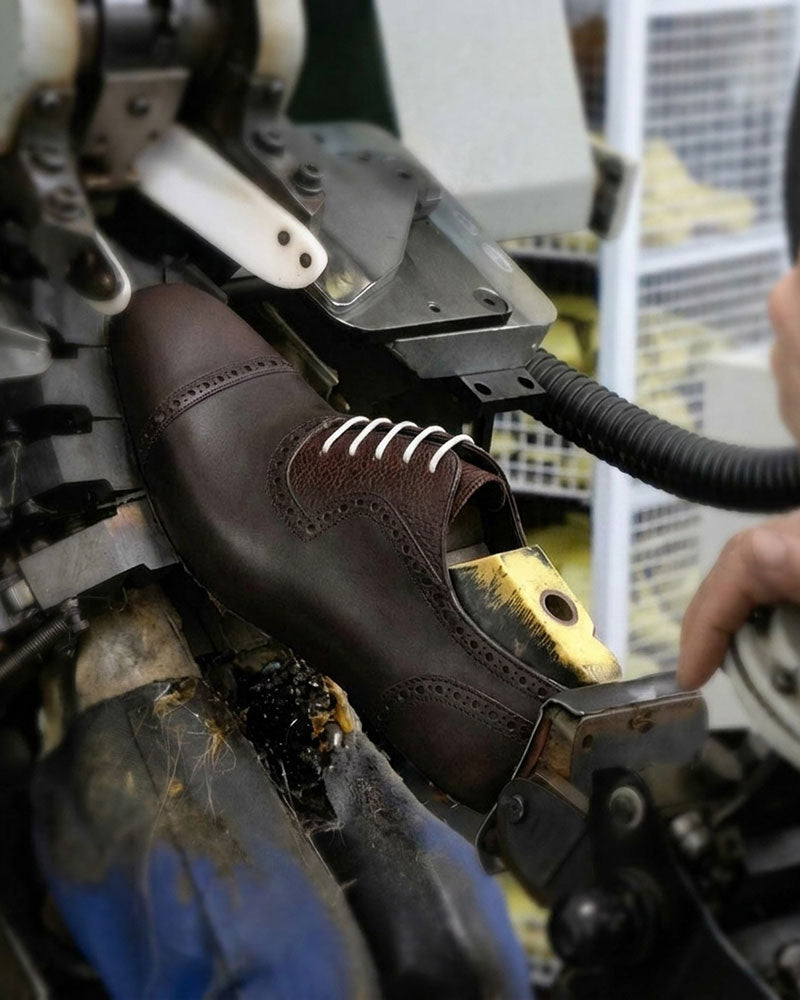
A shoe described as “handcrafted” may still involve machines. In fact, most high-quality shoes do. The term often signals that human skill plays a role, though it does not specify where or how.
“Handmade” suggests something more specific, yet it is also used broadly.
For the client, this creates a quiet ambiguity. Two shoes may appear identical. Their construction may follow entirely different paths.
What “Handcrafted” Really Means
A handcrafted shoe brings together mechanical precision and human refinement.
The structure is typically established using methods such as Goodyear welting, where machines ensure consistency and durability. From there, the work transitions into the hands of the maker.
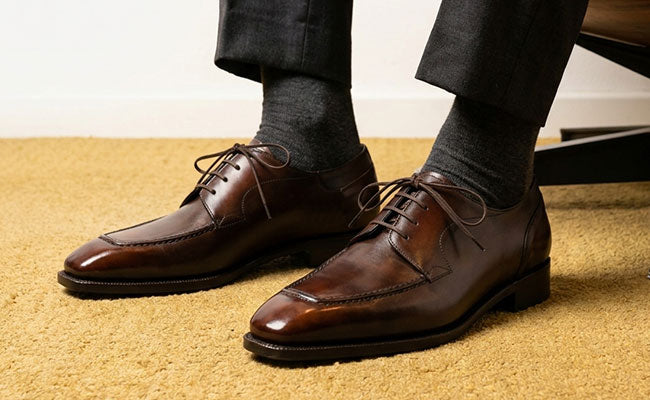
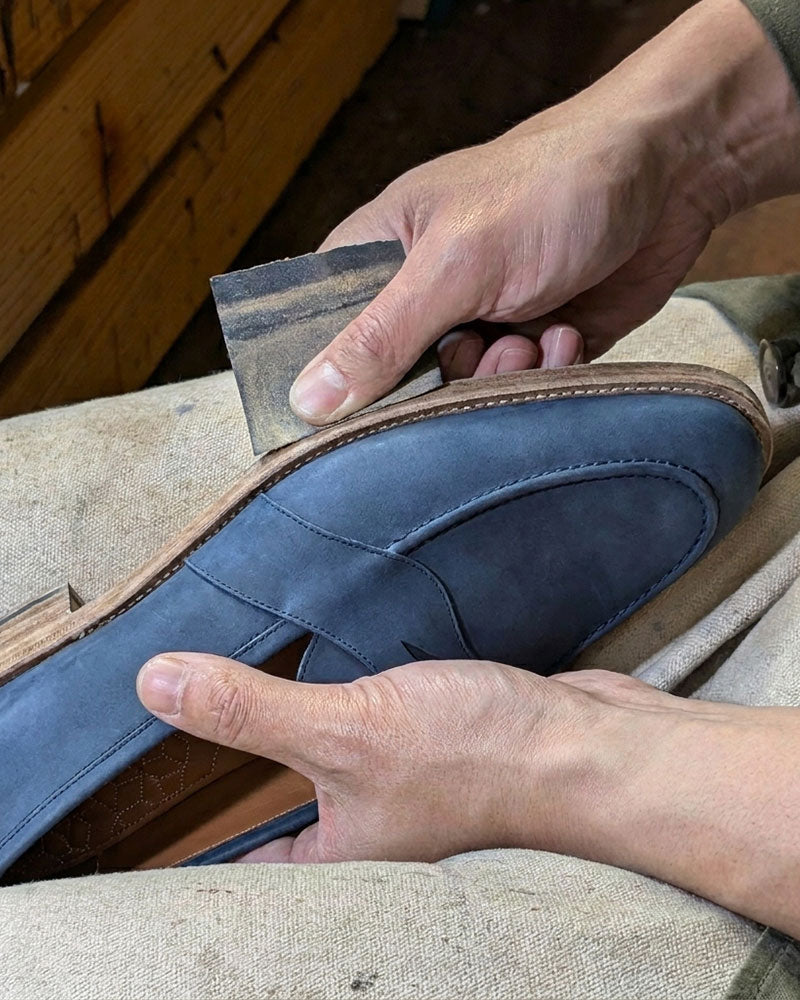
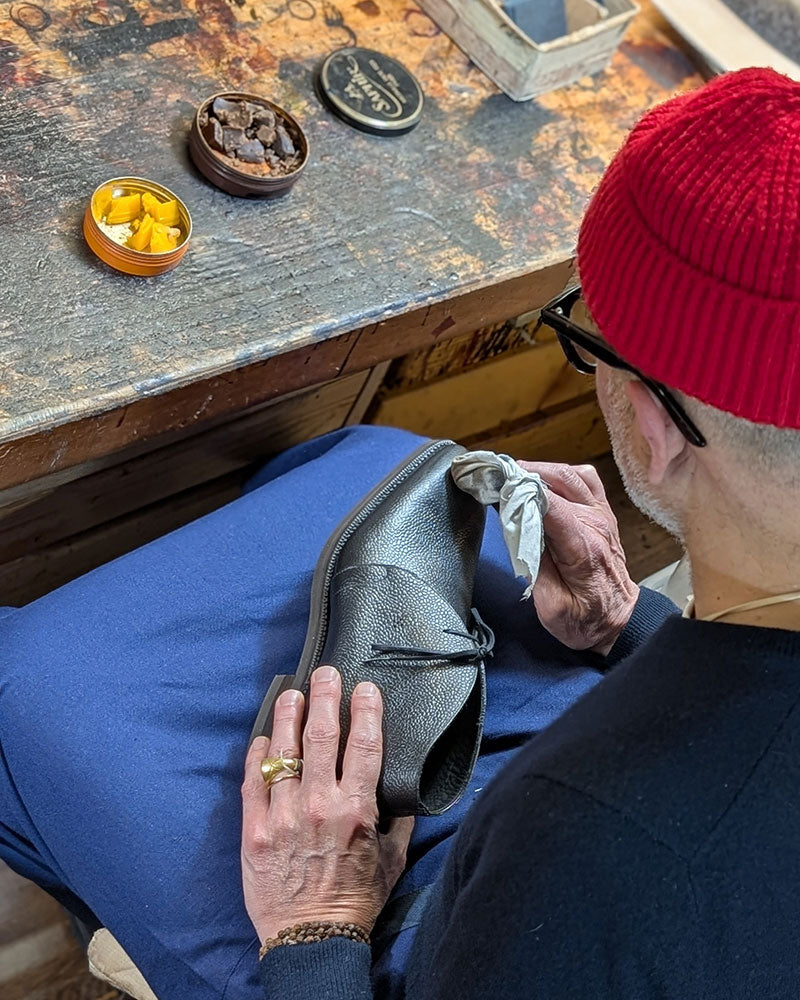
Edges are shaped and burnished.
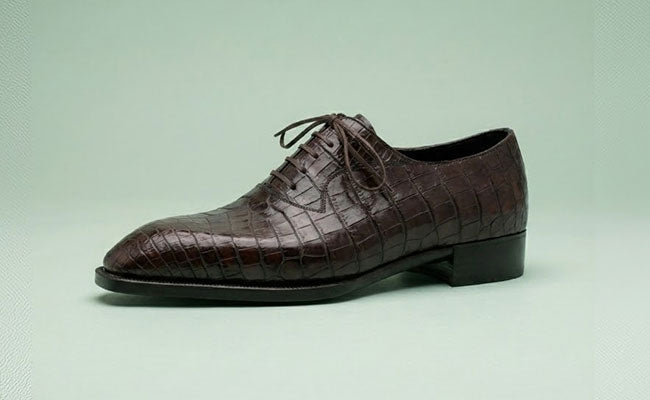
Leather is polished and deepened in tone.
The surface is worked gradually until it begins to reflect light in a particular way.
It is in these final stages that the shoe takes on its character.
What “Handmade” Truly Implies
A fully handmade shoe follows a different rhythm.
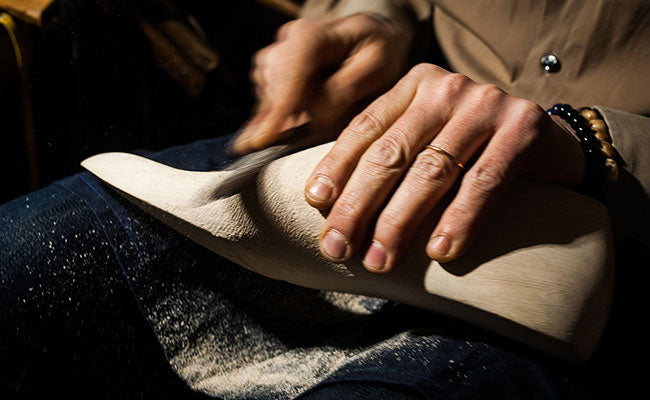
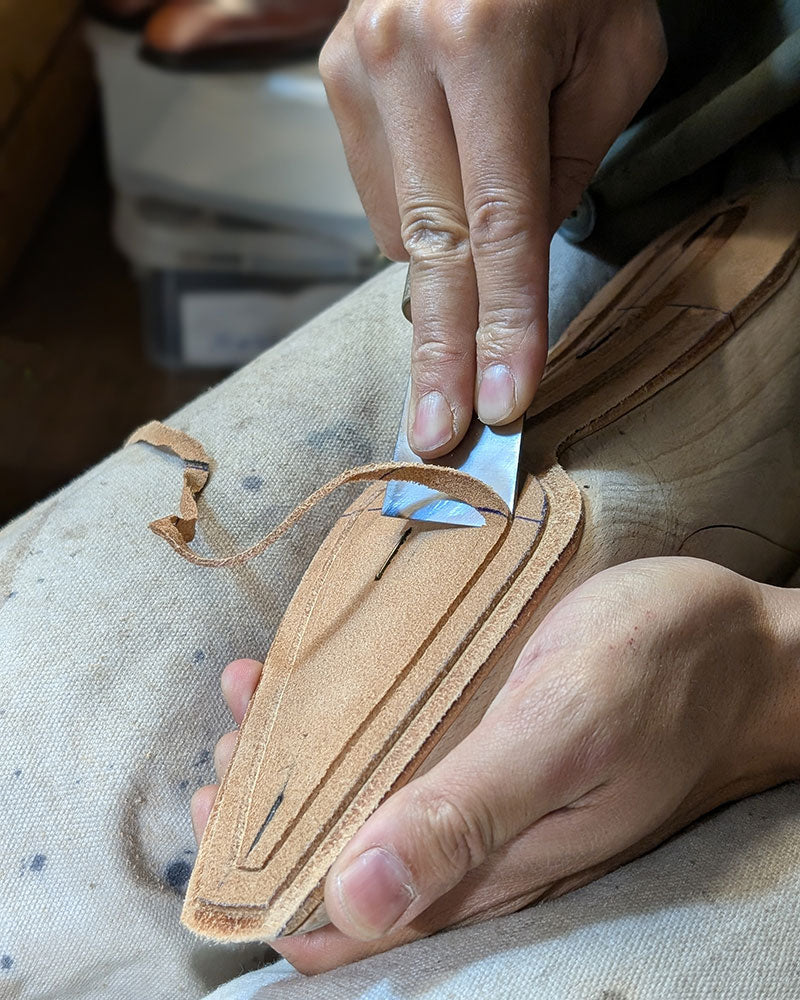
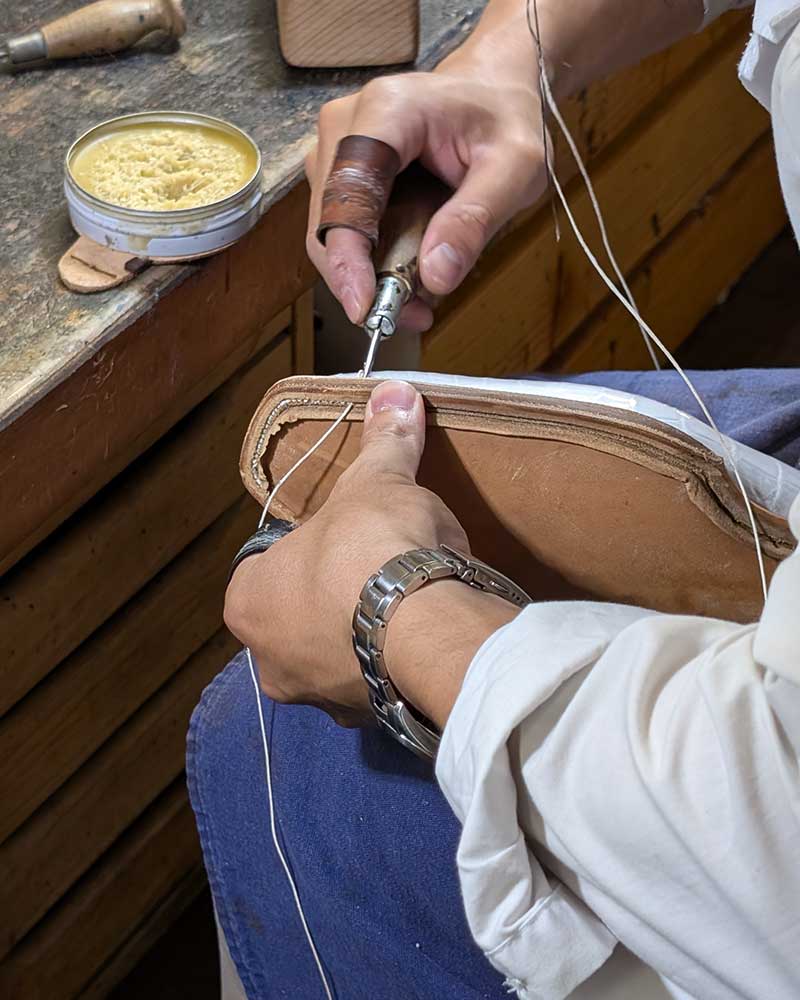
Rather than dividing the process between machine and hand, each stage is carried forward manually. From lasting to welting to stitching the sole, the same continuous control remains with the maker.
There is no separation between structure and refinement. Both evolve together.
This approach allows for adjustments not only at the end, but throughout the entire process.
Where Craft Actually Lives
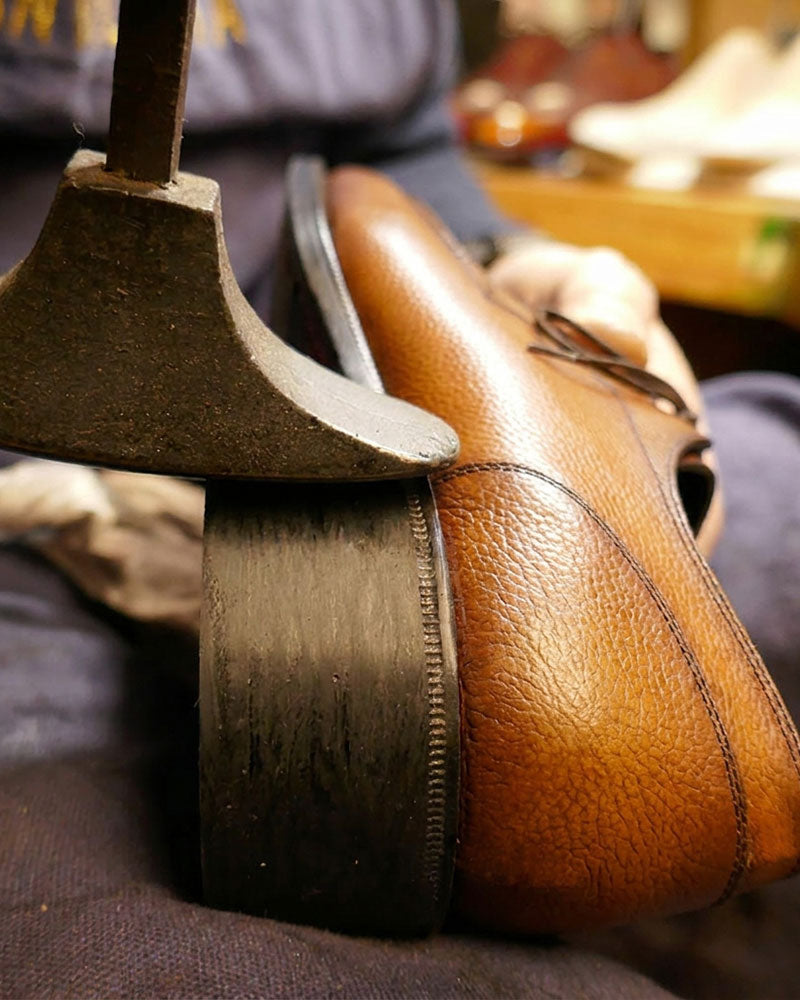
Regardless of how a shoe begins, much of its character is defined at the end.
The way the leather is finished. The way the edges are worked. The way the final form is refined.
These are not mechanical outcomes. They are decisions made by hand.
In this sense, both handcrafted and handmade shoes share something essential. The presence of the hand is not limited to a category. It is expressed differently within each method.
A Question of Process and Time
Over time, the differences reveal themselves in subtle ways.
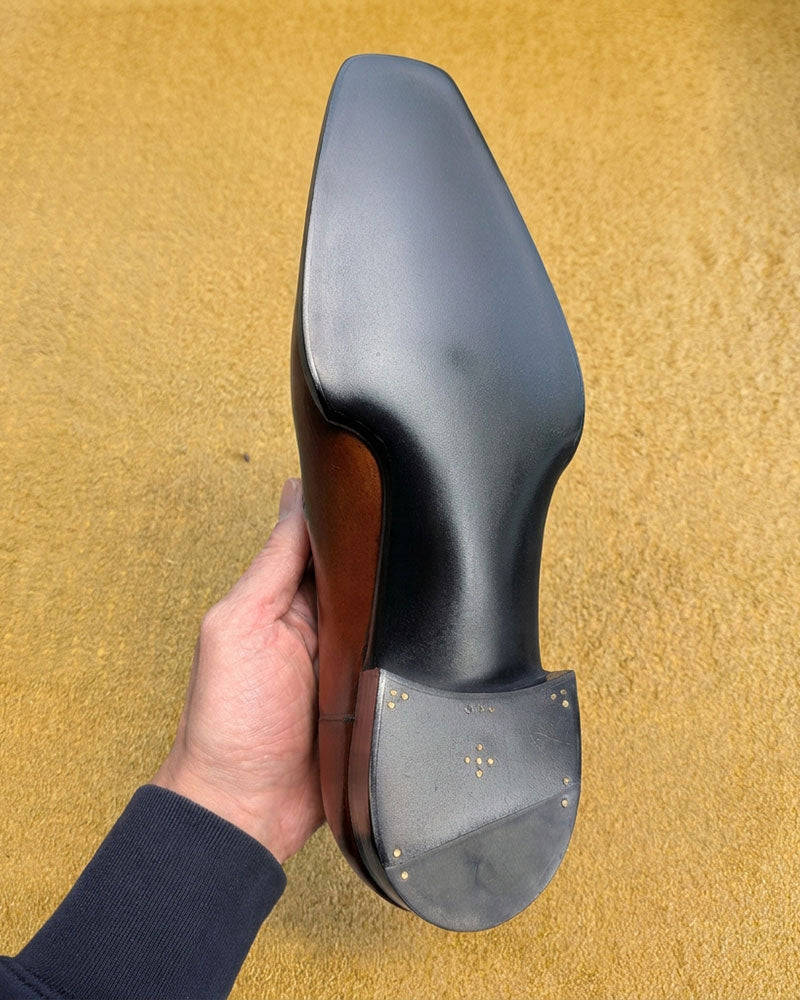
A handcrafted shoe offers structure and consistency, with its character shaped through careful finishing.
A handmade shoe allows for more variation within the process itself, where each stage can be adjusted as the shoe takes form.
Both age well. They simply arrive there differently.
How People Typically Discover the Difference
For many, the distinction is not immediate.
A handcrafted shoe is often where the journey begins. It introduces structure, comfort, and the visible effects of hand-finishing.
Over time, curiosity tends to follow.
Not necessarily for something better, but for something made differently. A desire to understand how a shoe changes when every step is shaped by hand.
It is not a requirement. It is simply where some paths lead.
Two Ways of Working, One Philosophy
At Norman Vilalta, both approaches are part of the same pursuit.
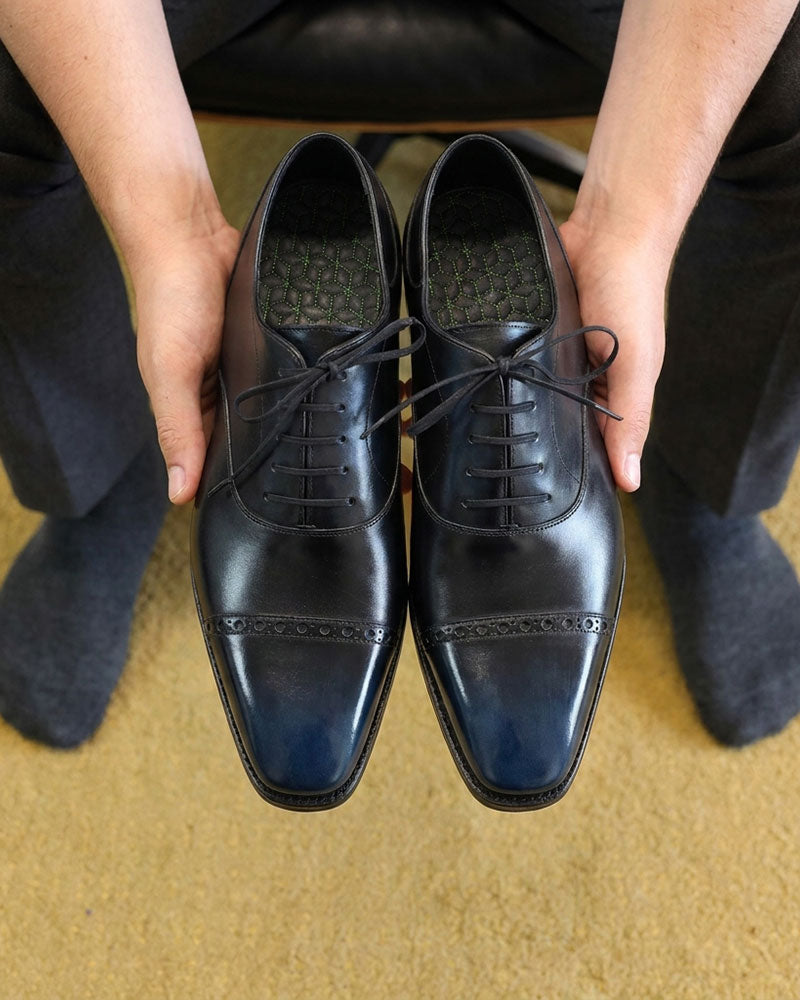
The Condal Collection is built using Goodyear-welted construction, then shaped and refined extensively by hand. Much of its character emerges during the finishing process, where each pair is worked individually.
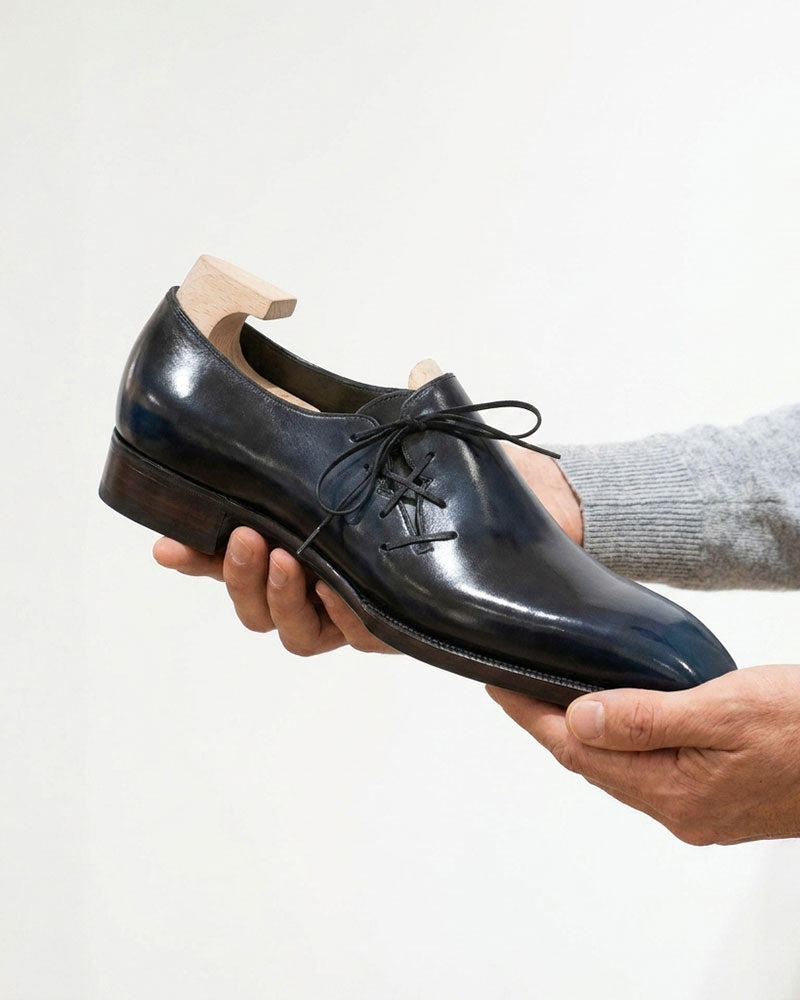
The 1202 Heritage Collection follows a fully handmade method, where the same level of attention extends throughout the entire construction.
Two different starting points. One shared intention.
Continue Exploring:
Goodyear-welted shoes, shaped and finished by hand in our workshop.
Fully handmade shoes, built step by step without relying on automated processes.