
Why Norman Vilalta Shoes Look Different
In shoemaking, some of the most important design decisions are often the least obvious.
Most people notice the leather, the color, or the shape of a shoe first. Few ever stop to consider the pattern itself, even though it is one of the elements that most defines the character and silhouette of a shoe.
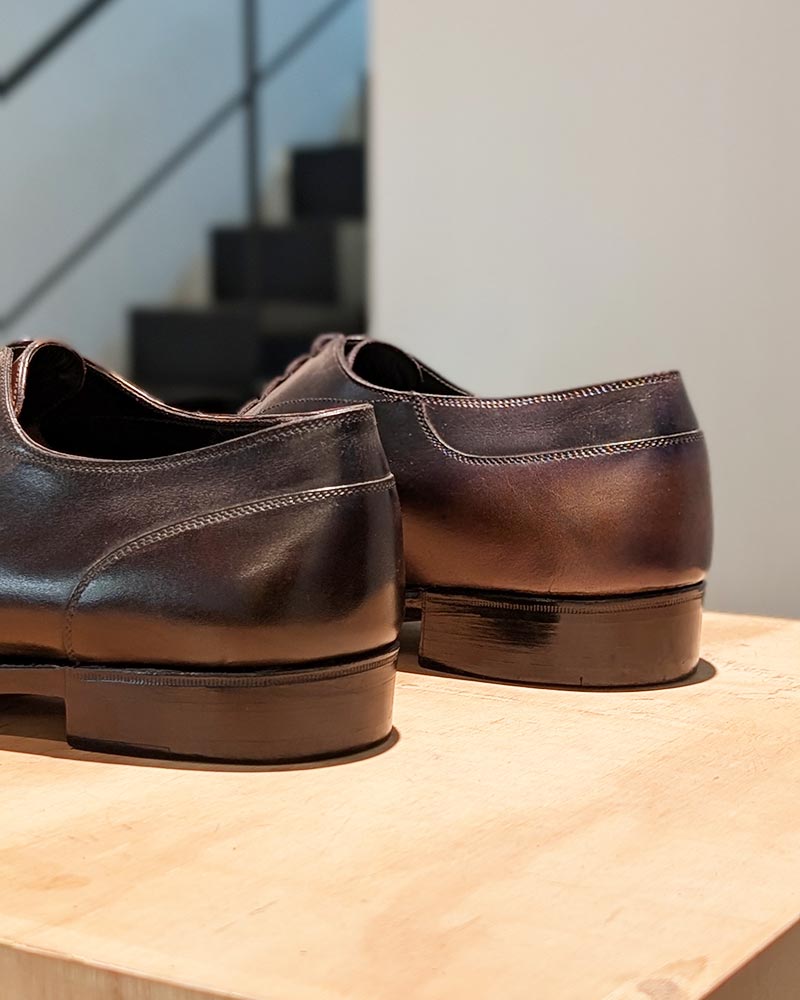
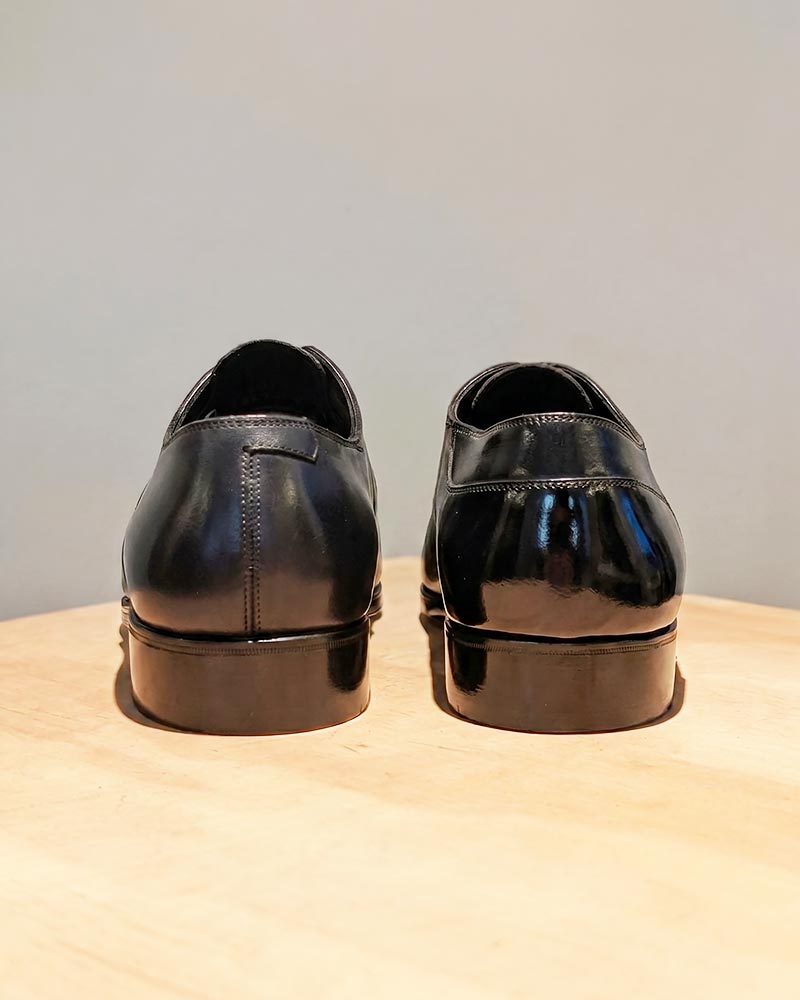
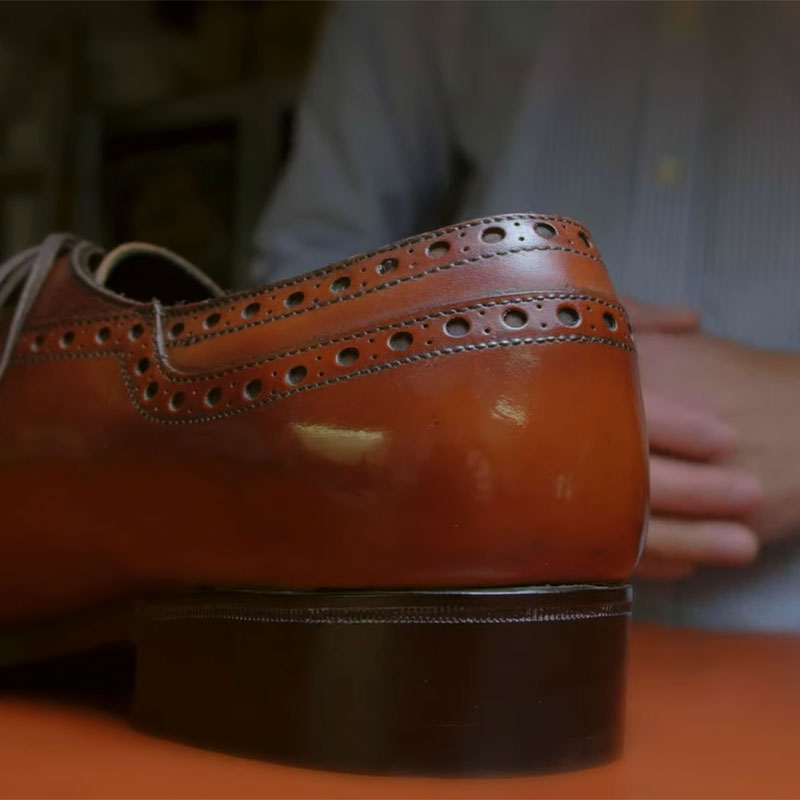
At Norman Vilalta, one of the defining characteristics of our designs is the asymmetric pattern that wraps continuously around the heel without the traditional center-back seam found on most classic dress shoes.
It is a detail that many people notice instinctively, even if they cannot immediately identify why the shoe feels different.

What Is a Pattern in Shoemaking?
In fashion, the word “pattern” is often associated with prints or decorative motifs. In shoemaking, however, a pattern refers to the actual blueprint used to create the upper of the shoe.
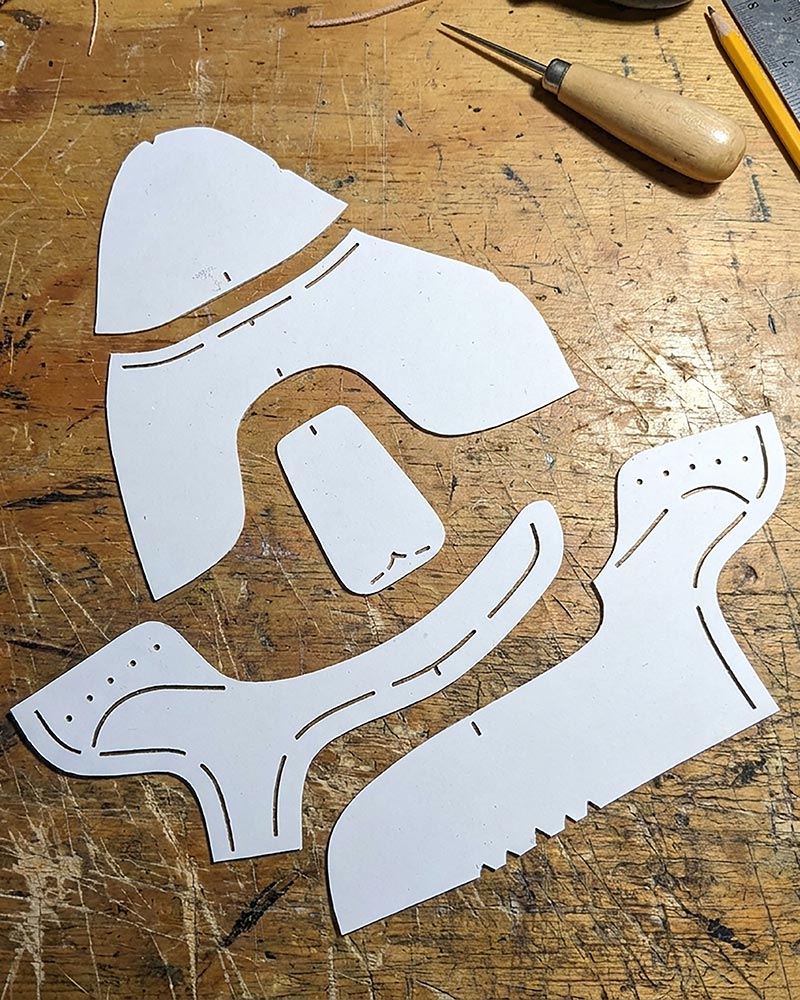
Every panel, seam, curve, and proportion is first designed in paper form before the leather is ever cut.
The pattern determines:
• The silhouette of the shoe
• How the shoe wraps around the foot
• The visual balance between the vamp, quarters, and heel
• Where seams appear and how they flow across the design
• The difficulty of construction
• The amount of leather required
In many ways, the pattern is the architecture of the shoe itself.
Traditional English shoemaking houses such as John Lobb or Edward Green typically use symmetrical patterns where the two quarters meet at the center-back seam of the heel.
This construction has existed for generations because it is practical, efficient, and structurally straightforward.
But Norman wanted something different.
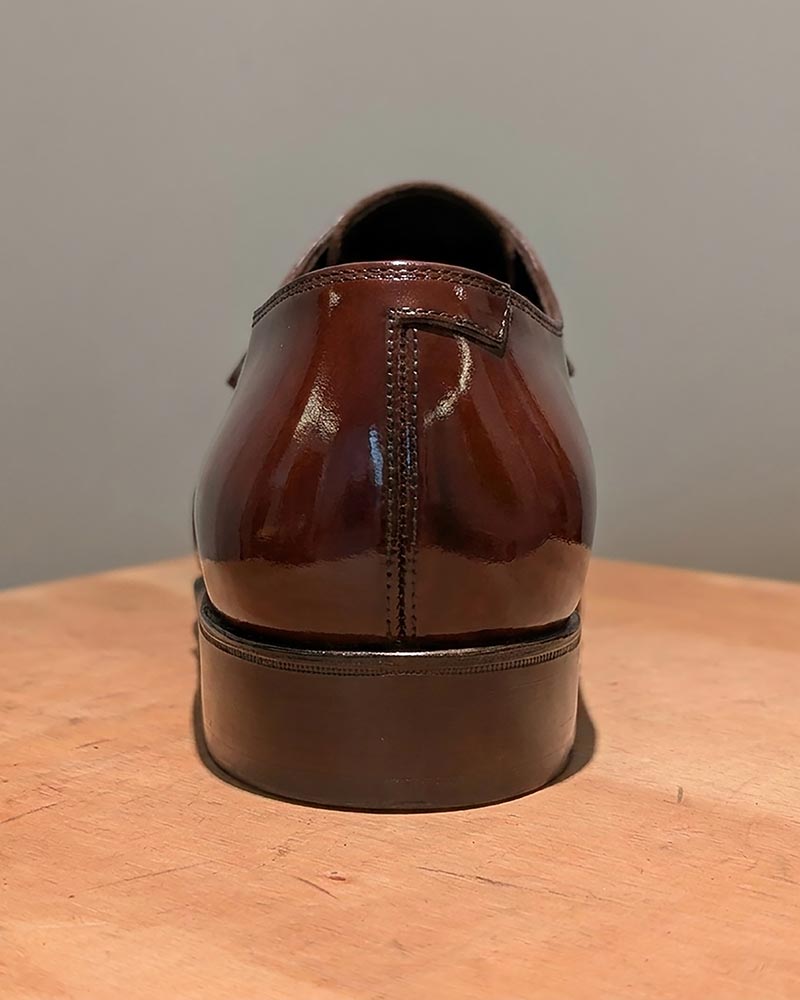
Rethinking the Heel
When Norman began designing his own patterns, he became increasingly dissatisfied with the visual interruption created by the center-back seam.
Structurally, the seam serves a purpose. It helps shoemakers build curvature into the heel area more easily.
Aesthetically, however, Norman felt it interrupted the flow of the silhouette.
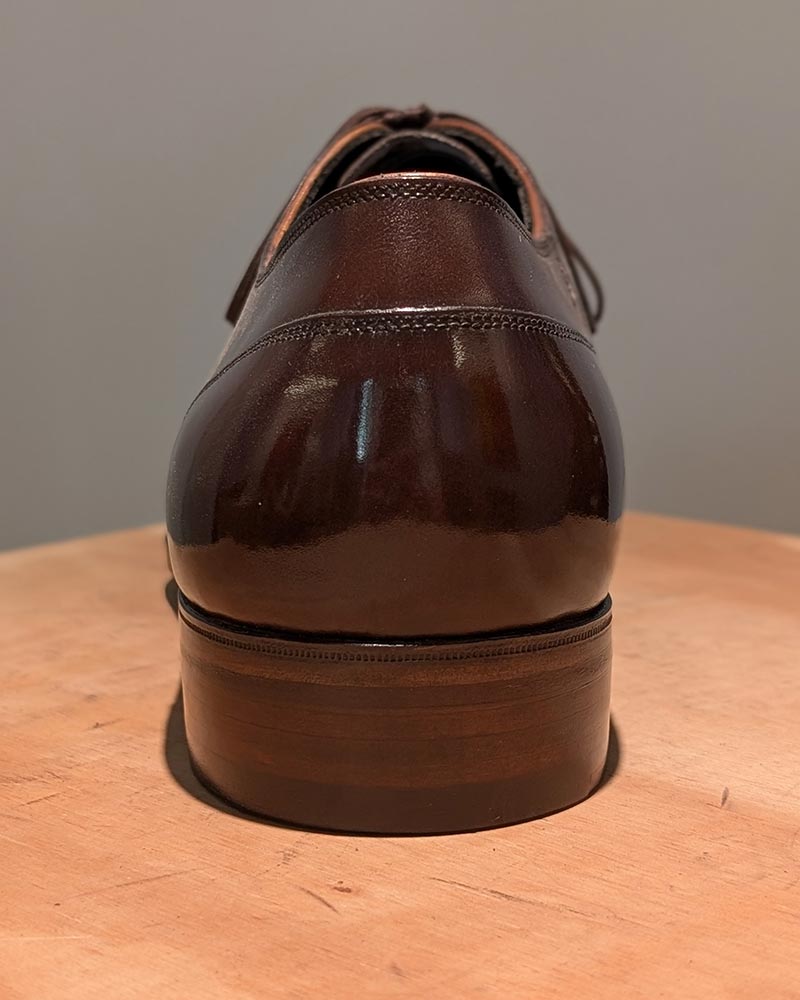
Rather than allowing the lines of the shoe to move uninterrupted around the foot, the seam visually cuts the heel in half.
His solution was to redesign the entire rear structure of the pattern.
Instead of joining two symmetrical sides together at the back, the pattern wraps asymmetrically around the heel in one continuous movement, creating a cleaner and more streamlined silhouette from every angle.
The result is subtle, but immediately recognizable once seen.
The heel feels sculpted rather than assembled.
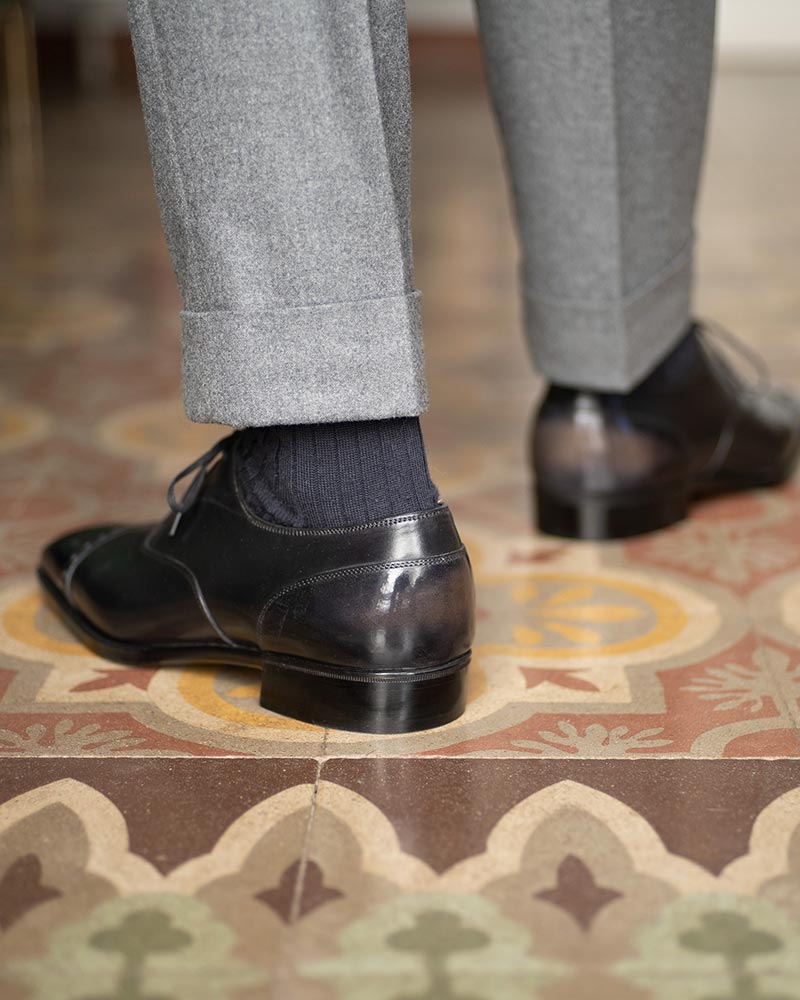
A Design Customers Often Notice Subconsciously
Many clients notice that Norman Vilalta shoes feel visually different long before they understand why.
There is often a sense that the silhouette appears cleaner, more fluid, or more sculpted compared to traditional dress shoes, even if they cannot immediately identify the reason.
Part of this comes from the way the human eye naturally follows uninterrupted lines.
On most classic dress shoes, the center-back seam creates a visual stopping point at the heel. The eye unconsciously registers the interruption.
By removing that central seam and allowing the pattern to wrap continuously around the heel, the visual flow becomes smoother and more natural.
The effect is subtle, but it changes the perception of the entire shoe.
The silhouette appears longer, cleaner, and more refined from nearly every angle.
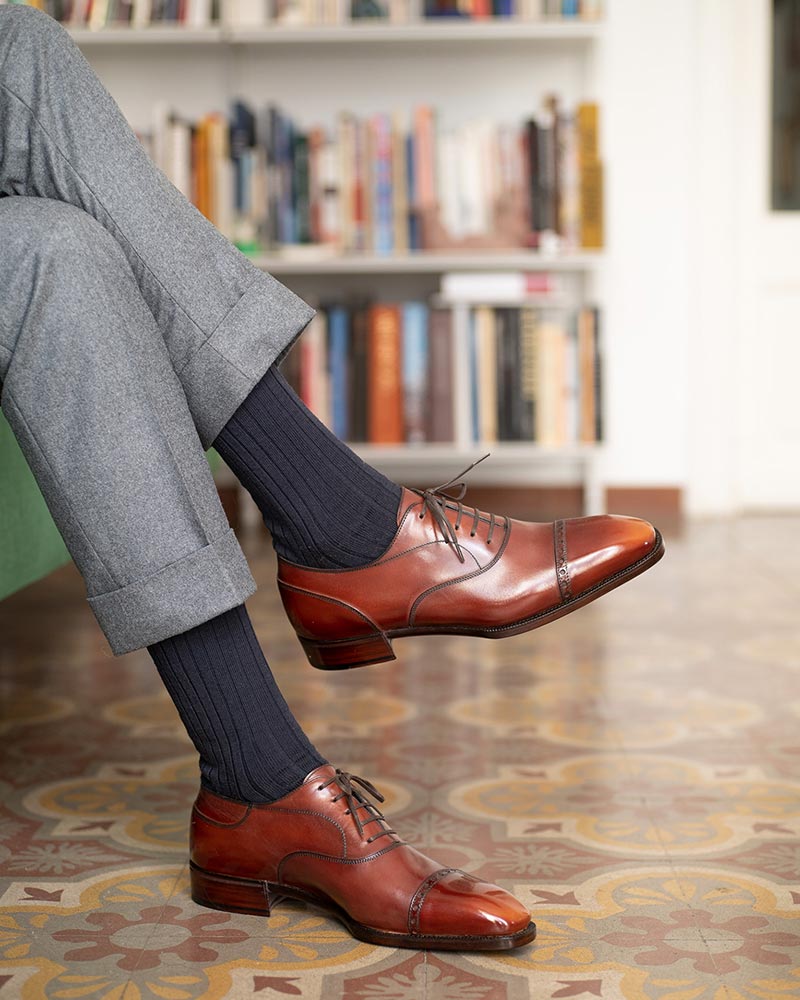
More Than a Heel Detail
The asymmetric pattern is not simply a small detail isolated to the back of the shoe.
Because the heel transitions differently into the rest of the upper, the proportions of the entire silhouette change.
The shoe feels more streamlined around the ankle and rear quarters, while the uninterrupted movement around the heel creates a more sculpted profile overall.
This is one of the reasons many Norman Vilalta shoes feel visually distinct even from a distance.
The difference is often emotional before it becomes technical.
Why It Is More Difficult to Make
The asymmetric pattern is considerably more difficult to sew and construct than a traditional symmetrical pattern.
With a conventional center-back seam, the shoemaker joins two mirrored halves together. Because both sides are symmetrical, alignment is relatively straightforward.
Norman’s asymmetric pattern behaves very differently.
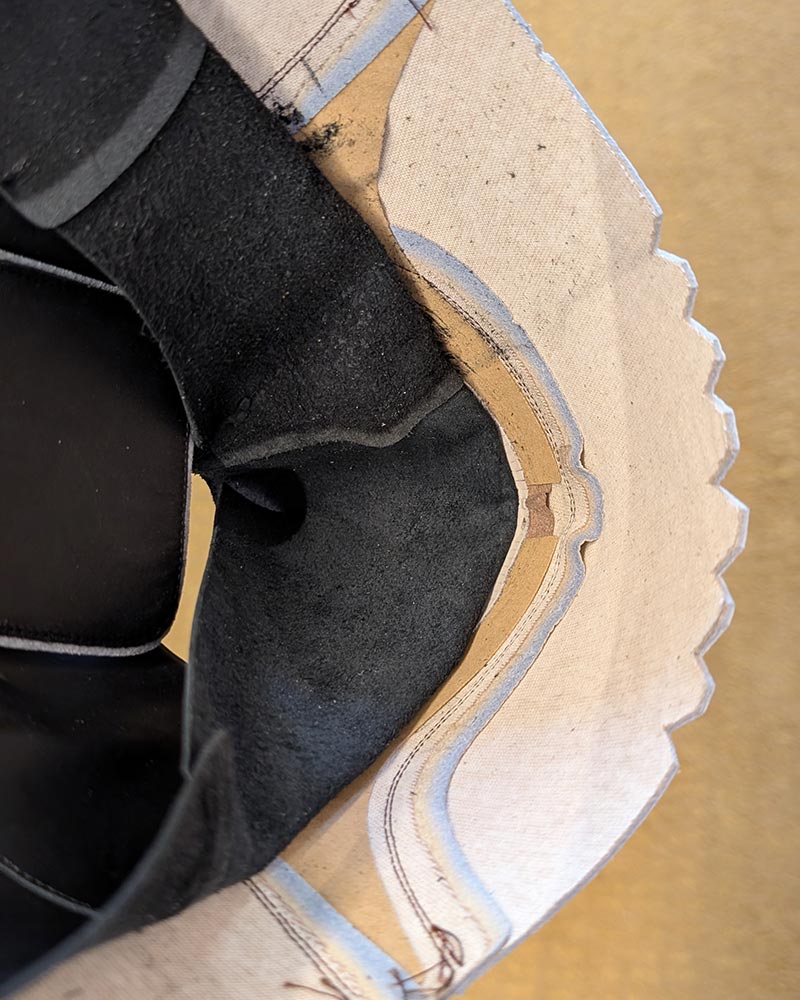
Instead of sewing two matching edges together, the shoemaker must carefully join a concave curve into a convex curve as the leather wraps continuously around the heel.
This requires greater precision during clicking, skiving, closing, and lasting.
Even small inconsistencies become more visible because the eye naturally follows the uninterrupted line around the back of the shoe.
The pattern is therefore not simply a visual design choice. It changes the technical demands of construction itself.
A Less Efficient Use of Leather
The asymmetric pattern also requires more leather.
Traditional symmetrical patterns are designed to optimize efficiency during cutting. Mirrored pieces can be nested together more economically across the hide.
Because Norman’s pattern wraps around the heel asymmetrically, the seam lines become longer across both the medial and lateral sides of the shoe.
This increases material consumption and creates more waste during clicking.
For most manufacturers, this would be considered inefficient.
For Norman, however, the priority was never maximizing yield from the leather.
The goal was to create a cleaner and more elegant silhouette.
An Independent Approach to Shoemaking
Many traditional shoemakers inherit established patterns from historic houses and continue refining them over generations.
Norman approached shoemaking differently.
Coming from outside the traditional English shoemaking system, he questioned many conventions that had long been accepted simply because they had always existed.
The asymmetric pattern emerged from that mindset.
Rather than accepting the center-back seam as inevitable, Norman rethought how the shoe could flow visually around the foot.
The result is not intended to imitate traditional English shoemaking, but to offer a different interpretation of elegance and proportion.
It reflects an approach to shoemaking rooted as much in design as in tradition.
Seeing the Difference
The asymmetric pattern is one of those details that becomes immediately obvious once it is pointed out visually.
For this reason, comparison imagery plays an important role in understanding the design.
Some of the most revealing comparisons include:
• A traditional center-back seam beside Norman’s asymmetric heel
• Rear heel views shown side-by-side
• Original paper patterns displayed together
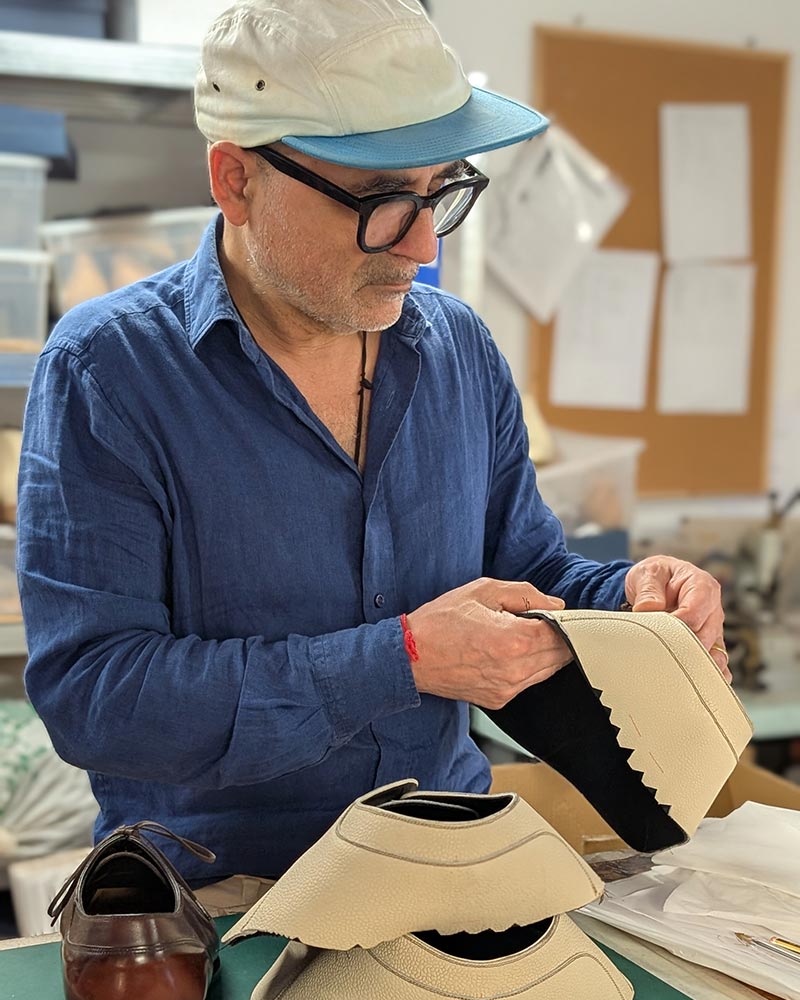
• A shoe upper laid flat before lasting
Once seen, many clients begin noticing the difference not only in Norman Vilalta shoes, but in nearly every other dress shoe they encounter afterward.
A Different Philosophy of Shoemaking
Many luxury shoes today differentiate themselves through leather quality, handwork, or heritage.
Norman Vilalta shoes are different at a more foundational level.
The pattern itself was reimagined.
The asymmetric construction reflects a philosophy that design should not simply follow tradition unquestioningly.
Even elements that most people accept as standard can be reconsidered if there is a more elegant solution.
It is a small detail in appearance, but one that affects the entire identity of the shoe.
The Last
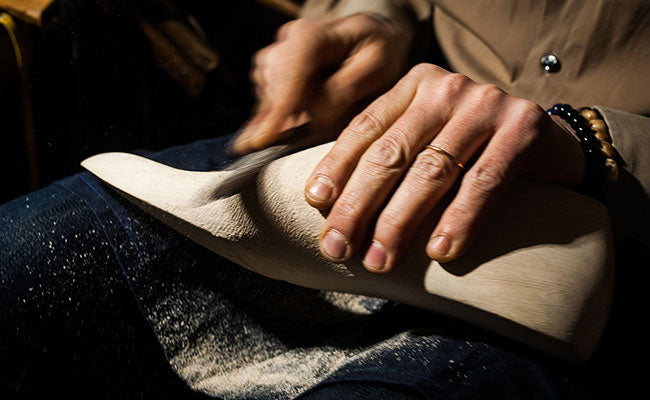
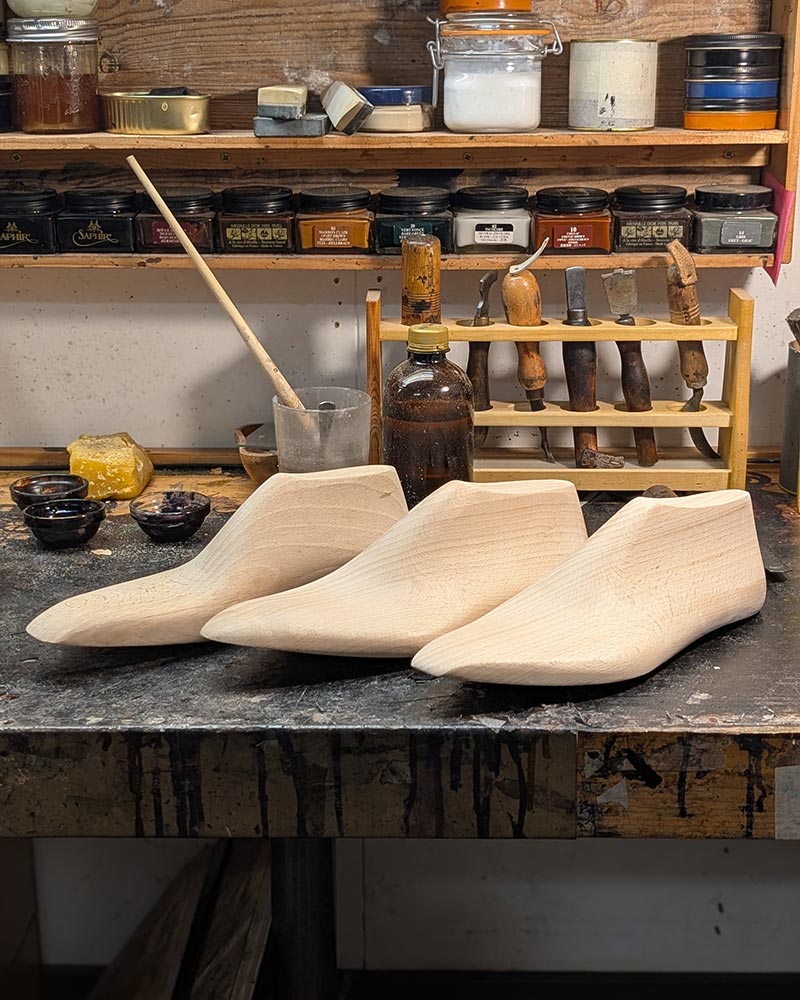
Every shoe begins with a design concept, but it is the last that transforms that idea into a wearable form.
The shape, proportions, and fit of a shoe are all determined by the last hidden beneath the leather.