
What Does Fully Handmade Mean in Shoemaking?
The term “handmade” is often used in shoemaking.
But it can refer to very different processes, depending on how the shoe is constructed.
In some cases, it describes a shoe that has been finished by hand. In others, it refers to a method where the entire structure of the shoe is built without industrial shortcuts.
Understanding the difference requires looking beyond the surface.
A Spectrum of Making
Not all shoes are made in the same way, even when they appear similar at first glance.
At one end, there are fully machine-made shoes, where most steps are standardized and carried out with speed and consistency.
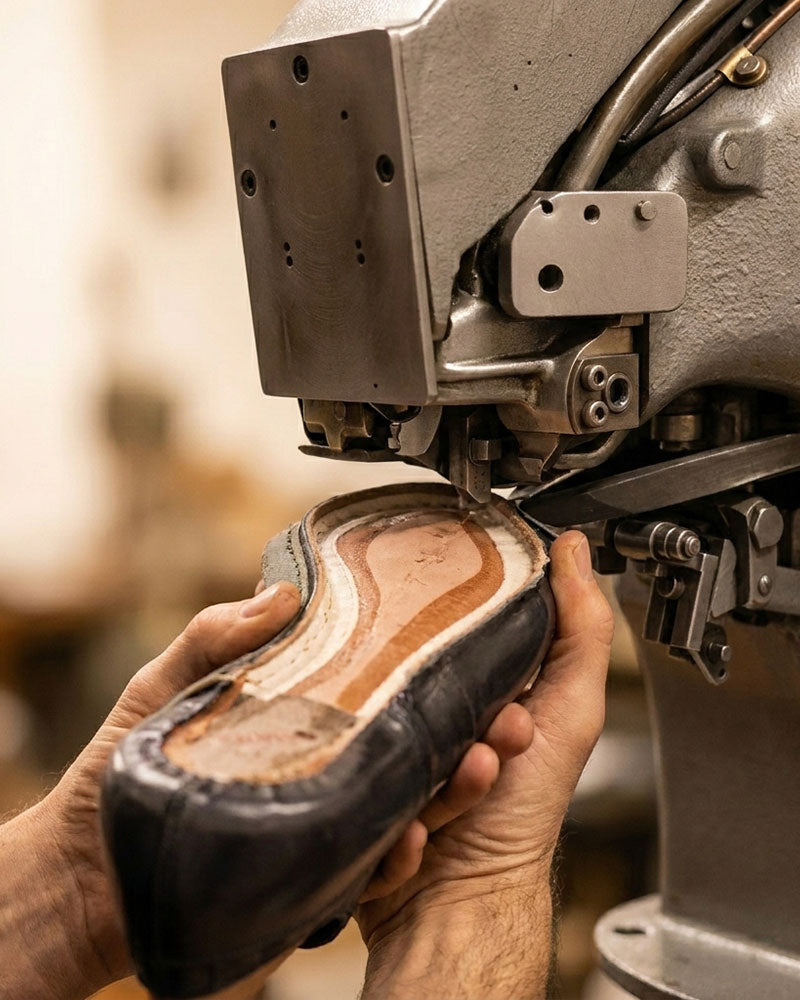
Further along, Goodyear-welted construction introduces a more durable method. A welt is stitched to the upper and insole using a machine, allowing the shoe to be resoled and worn over many years.
Beyond this, some shoes are hand-welted. The same connection is made, but done by hand rather than machine, allowing for greater control in how the shoe is shaped.
Each step along this spectrum reflects a different approach to making, and a different balance between efficiency and control.
What fully handmade actually means
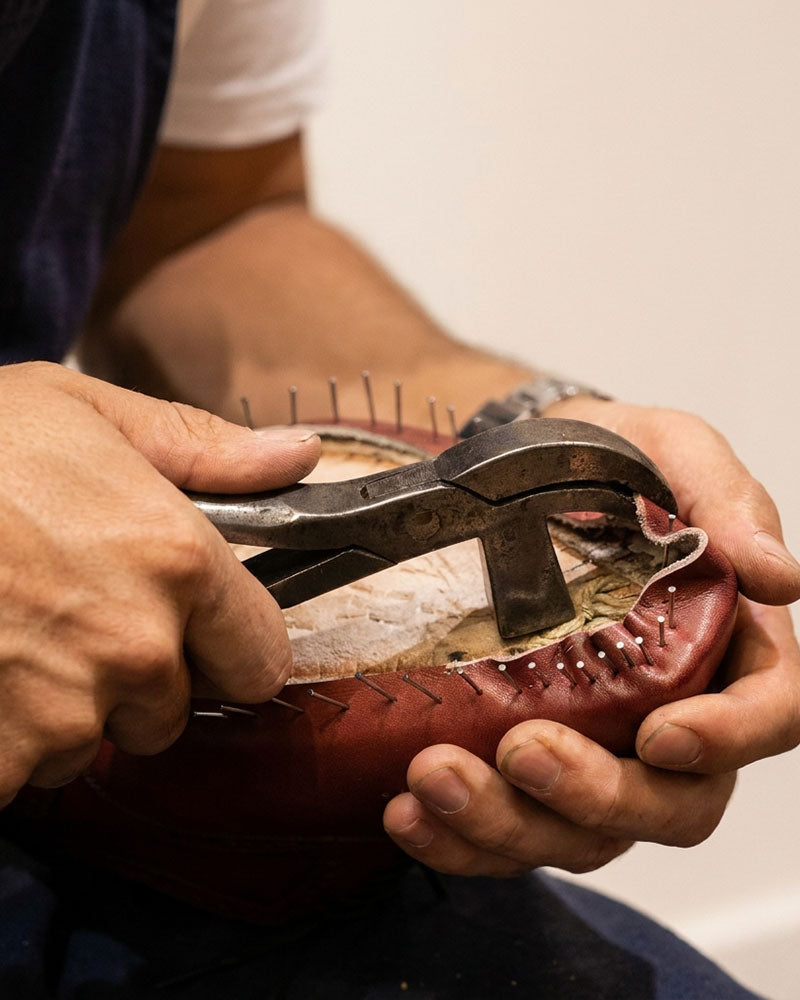
In fully handmade shoemaking, each structural step is carried out by hand.
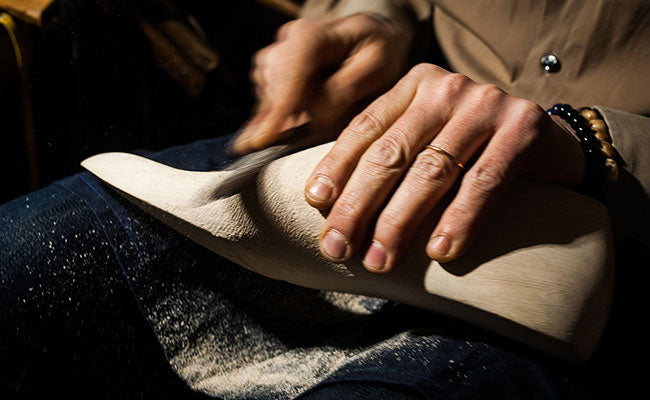
The upper is lasted by hand, allowing the maker to control tension and shape with precision.
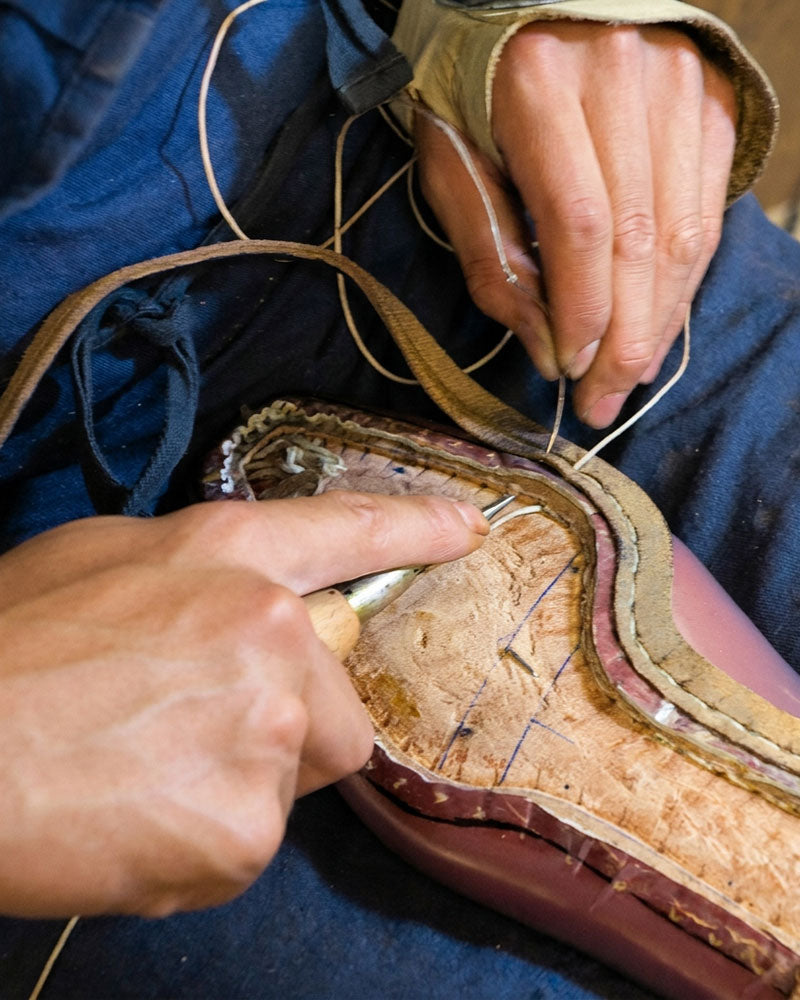
The welt is stitched by hand, directly attaching the upper to the insole without the use of pre-constructed components.
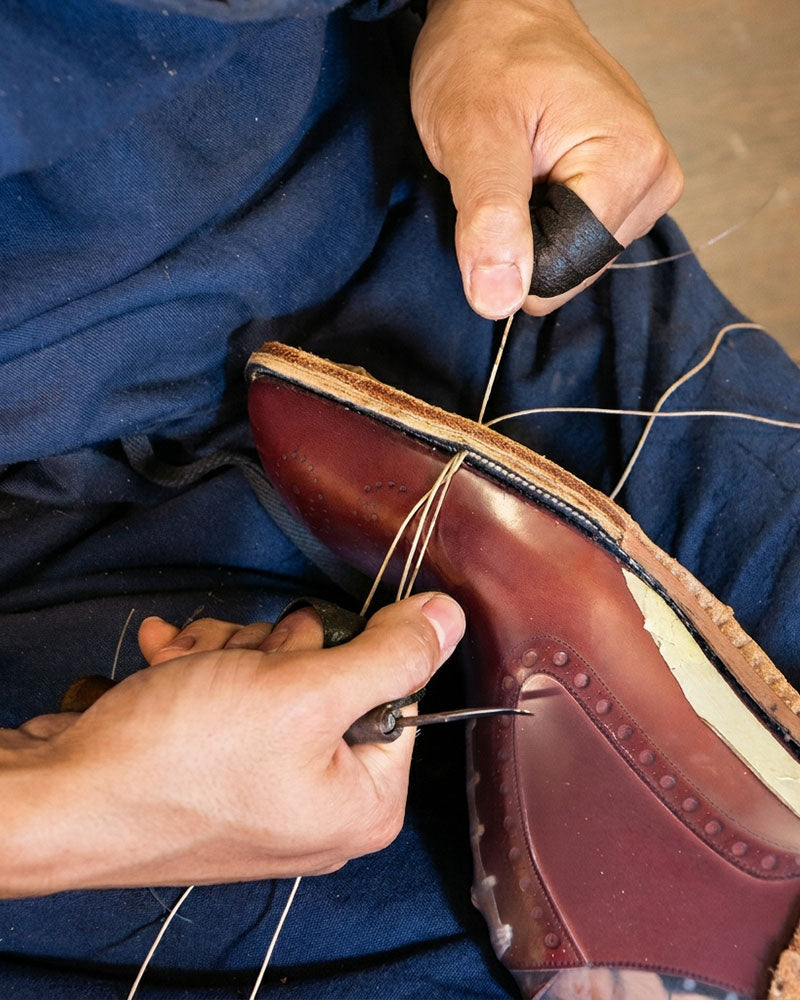
The outsole is then stitched by hand, completing the construction.
There is no reliance on pre-shaped insoles or standardized internal structures.
Each pair is built from the ground up, one step at a time.
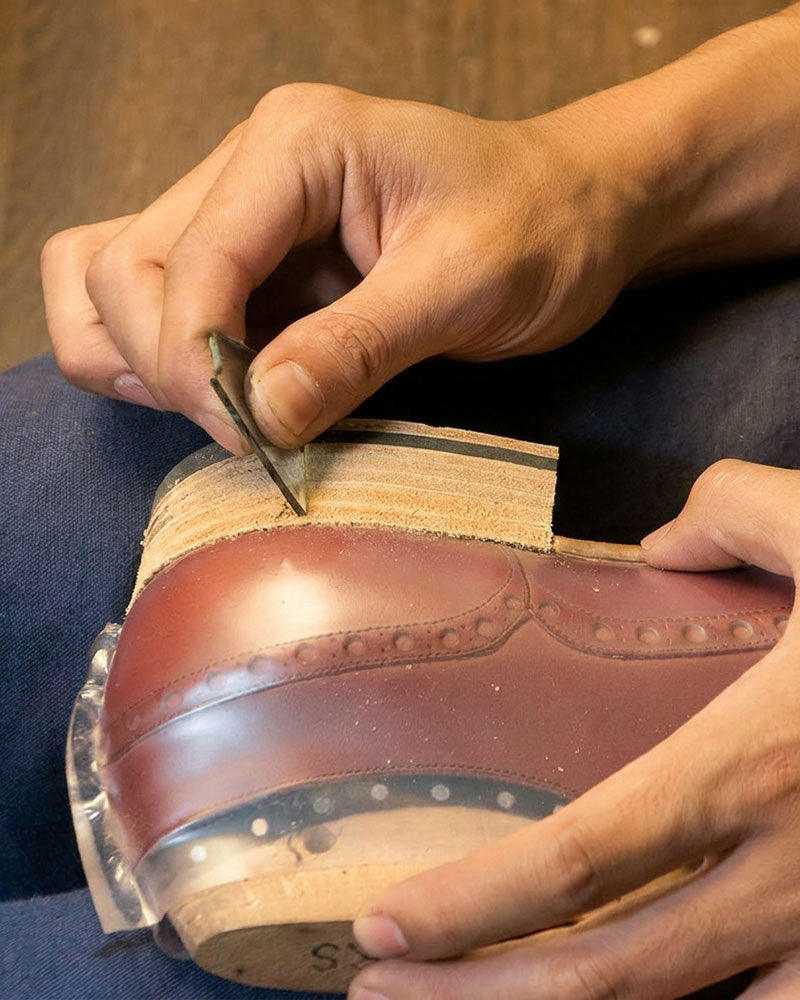
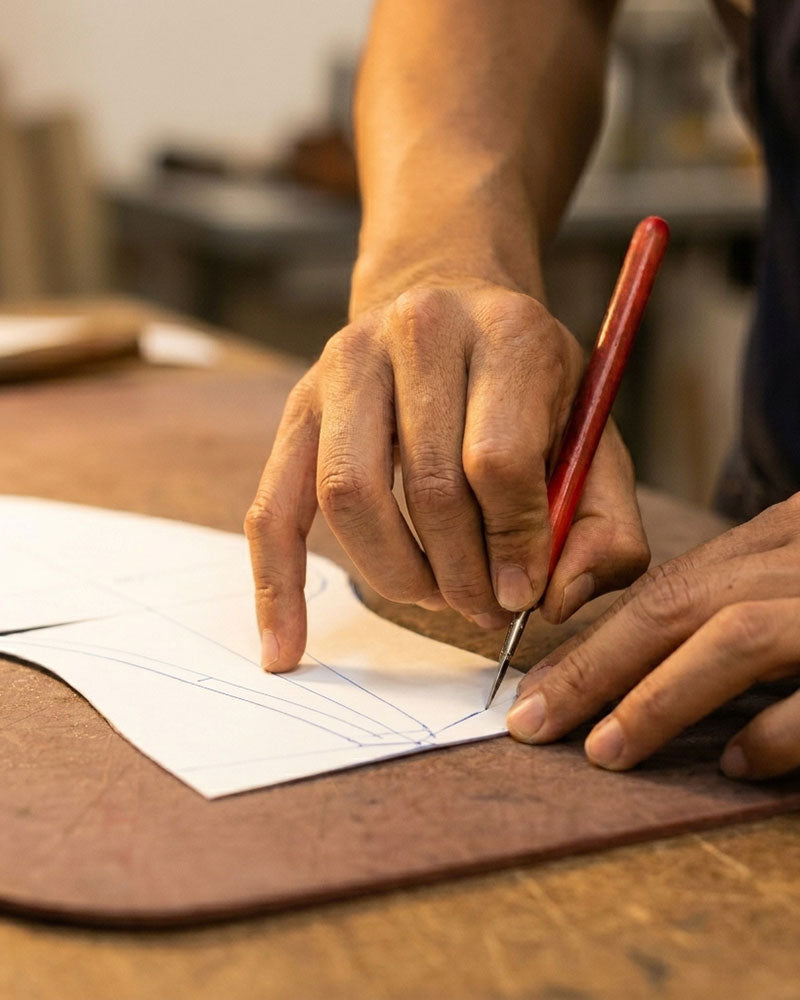
This handmade approach allows the shoe to be shaped more freely.
The waist can be drawn in more precisely.
The heel can be pitched to follow the natural movement of the body.
The overall silhouette becomes more sculptural.
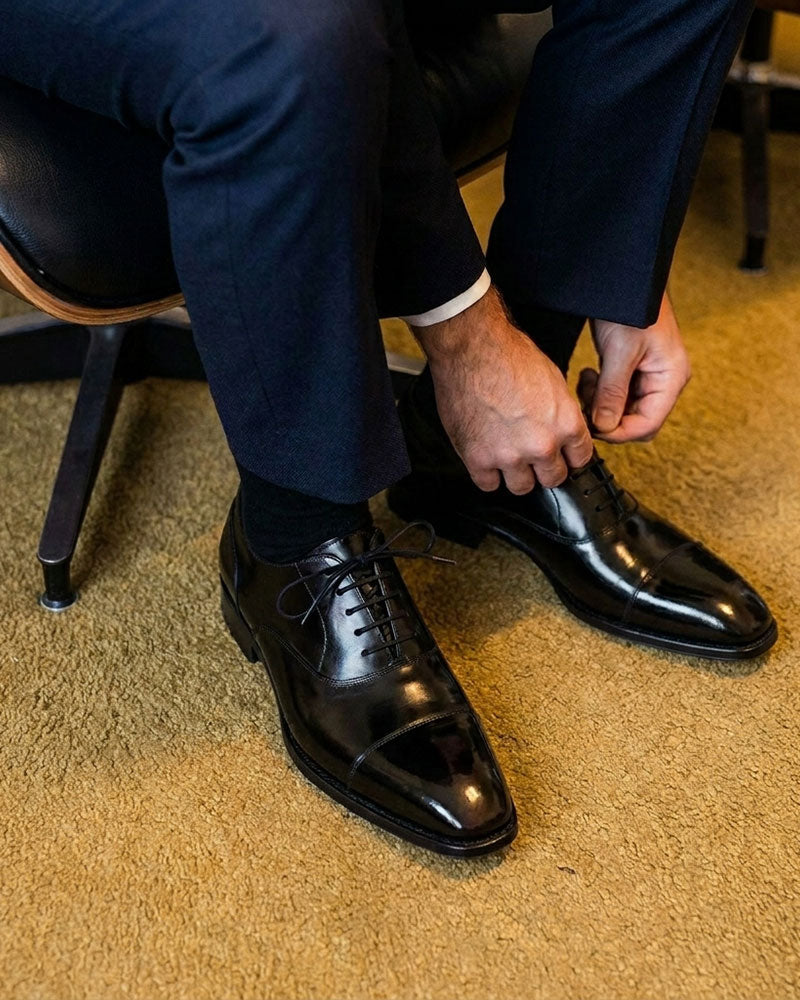
How it changes the shoe
These differences are not always immediately visible, but they become apparent over time.
A fully handmade shoe tends to feel different on foot. It adapts more gradually, responding to the way the wearer moves.
The structure is more flexible where it needs to be, and more supportive where it matters.
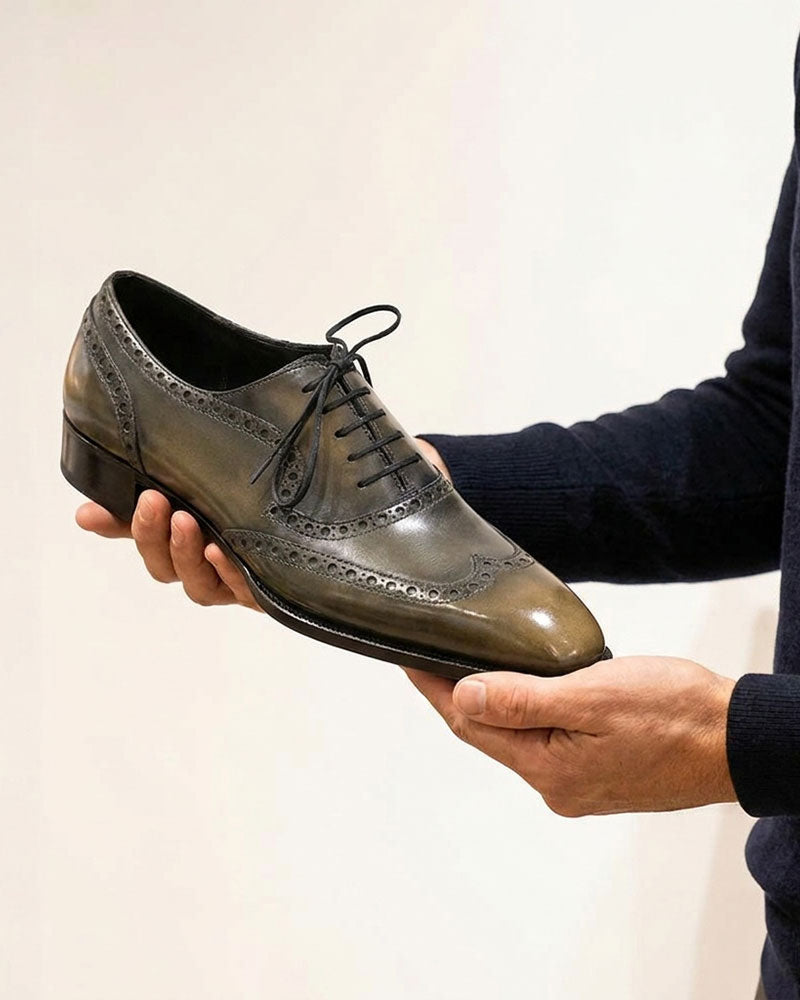
Visually, the lines of the shoe are often more refined. The proportions can be adjusted with greater subtlety. Nothing is forced into a predefined shape.
Over time, the shoe develops its own character, shaped by both the maker and the wearer.
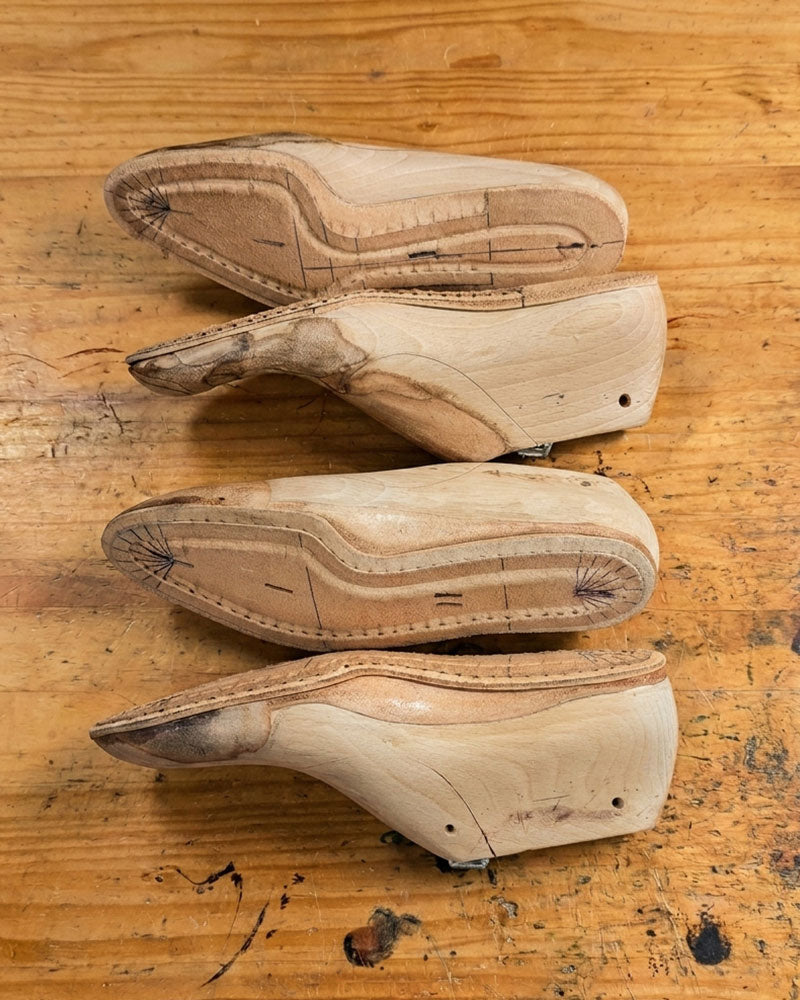
The Tradeoffs
This method of making requires time.
Each step depends on the skill of the shoemaker, and there are no shortcuts to accelerate the process. As a result, fully handmade shoes take significantly longer to produce.
They also require a higher level of experience to execute consistently.
For these reasons, they are less common.
Who it is for
Fully handmade shoes are not for everyone.
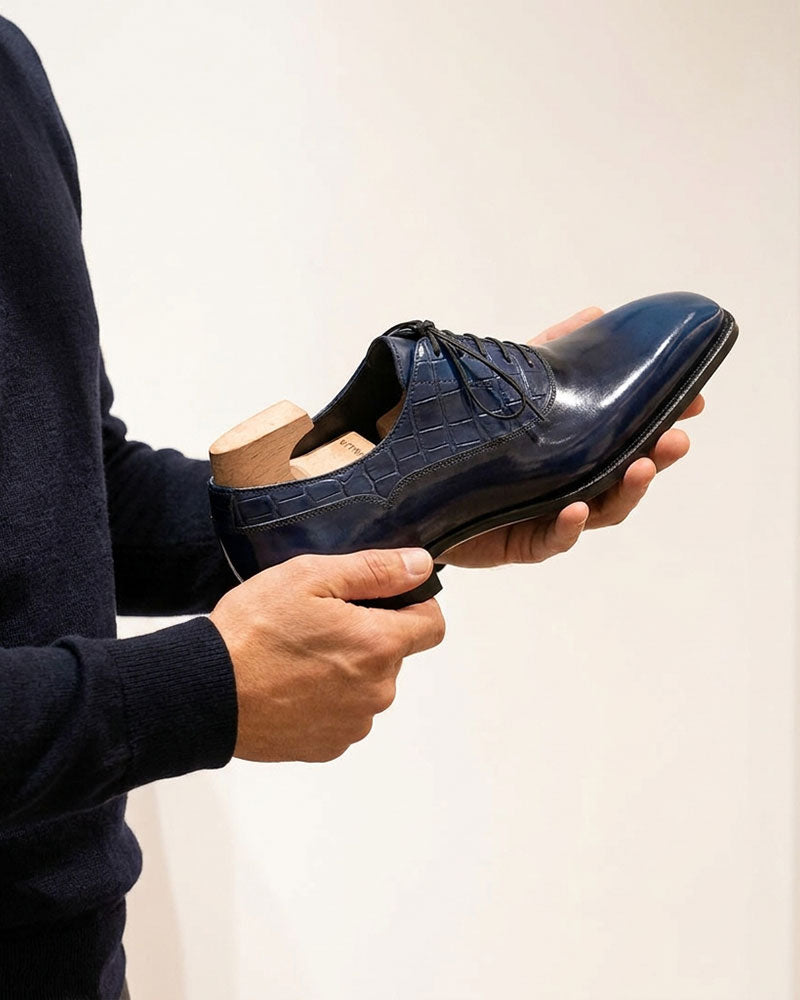
They tend to appeal to those who are interested in how things are made, and who value the process as much as the final object.
To someone simply looking for a functional shoe, the difference may not be immediately relevant.
But for those who notice small variations in shape, balance, and movement, the distinction becomes clearer over time.
A Different Approach
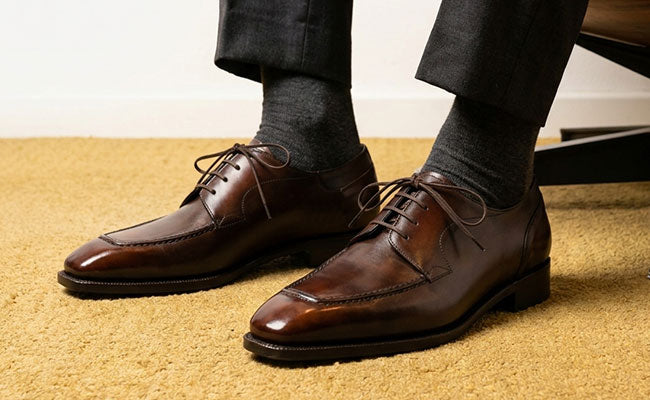
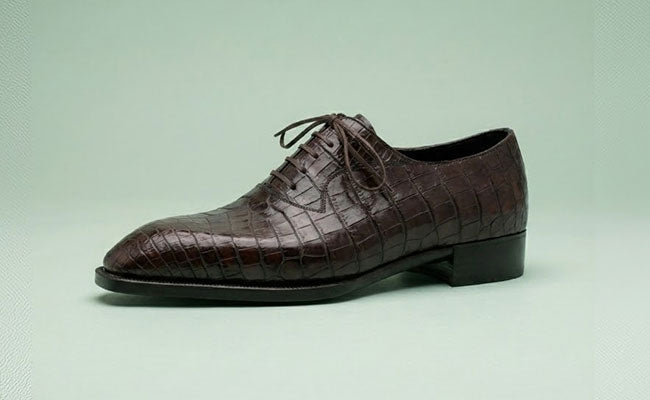
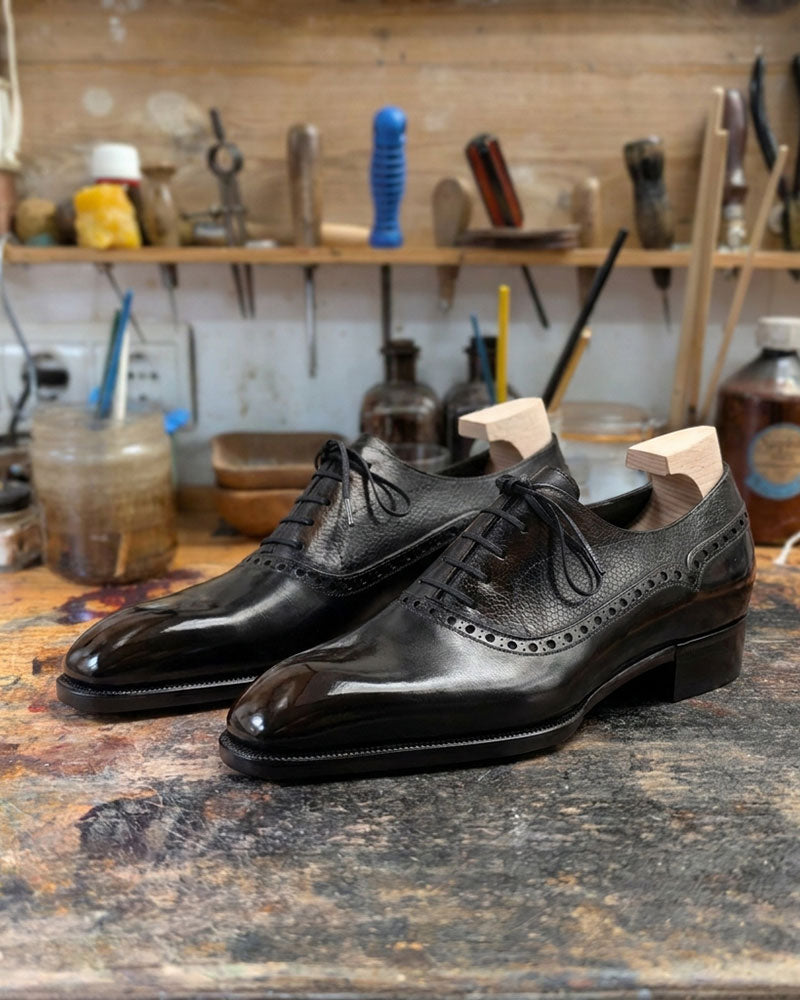
Our Bespoke Shoes and 1202 Heritage Collection are built entirely using this handmade method.
Each pair is made step by step by hand, without relying on pre-structured components, and finished by hand in our workshop.
It is a slower way of working. But it allows for a level of control and expression that is difficult to achieve otherwise.