
How the 1202 Heritage Collection Is Made
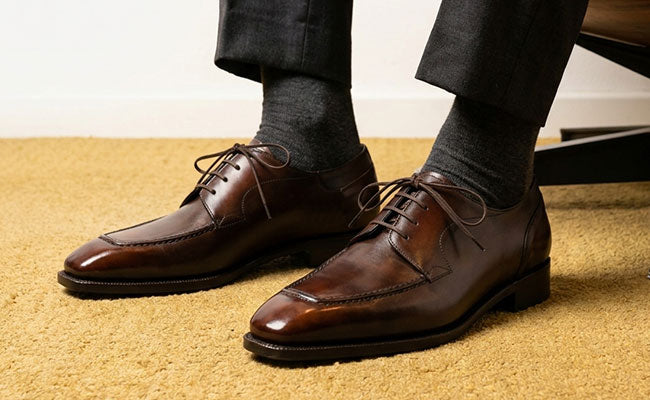
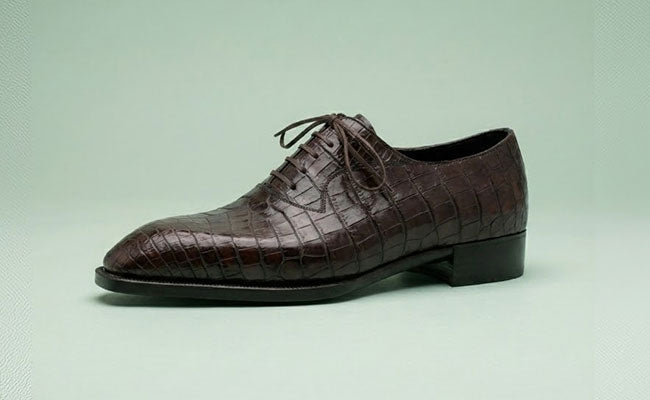
The 1202 Heritage Collection represents the highest level of shoemaking we produce outside of full bespoke.
Each pair is crafted by hand using traditional methods that have nearly disappeared from modern production. The process requires hundreds of operations performed slowly and precisely by a small team of master shoemakers.
For many of our clients, understanding how these fully handmade shoes are made transforms how they experience them. What appears understated on the outside reveals an extraordinary level of work beneath the surface.
This guide walks you through the six key stages of the process.
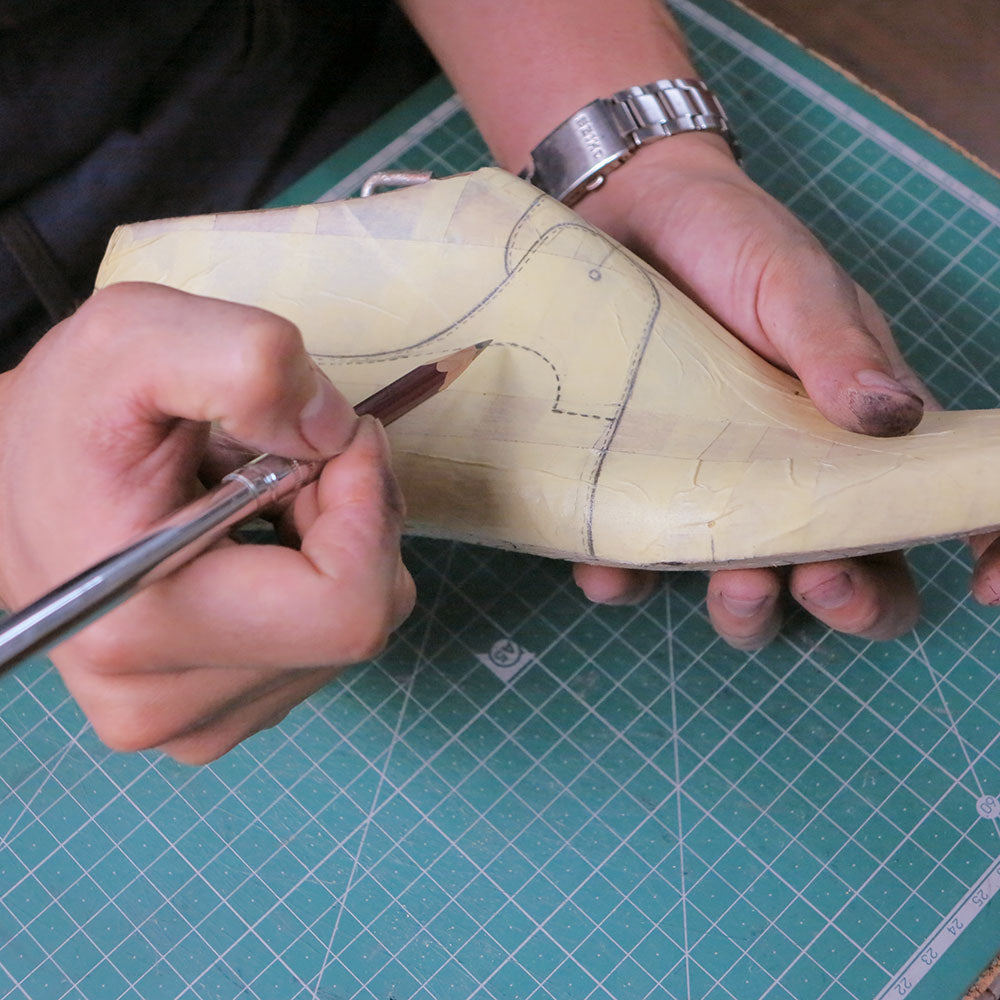
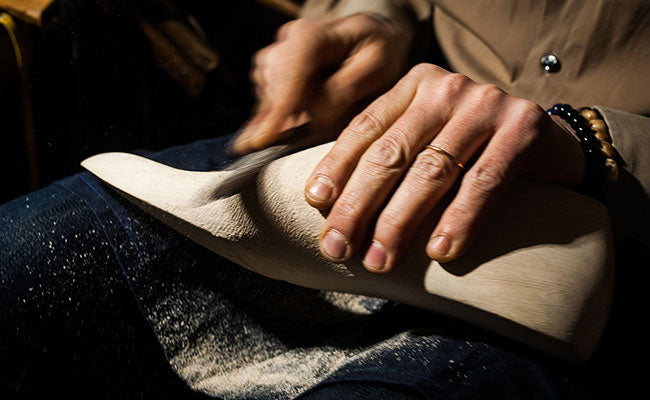
Pattern Design and Last Development
Every model begins with a pattern designed specifically for its last.
Unlike mass production where patterns are scaled mechanically, our patterns are developed by hand to ensure that the proportions, seam placement, and balance remain correct across sizes.
Small adjustments to the last shape influence:
• How the shoe fits
• How the leather stretches
• How the finished silhouette appears on the foot
This stage determines whether the shoe will feel refined or ordinary before a single piece of leather is cut.
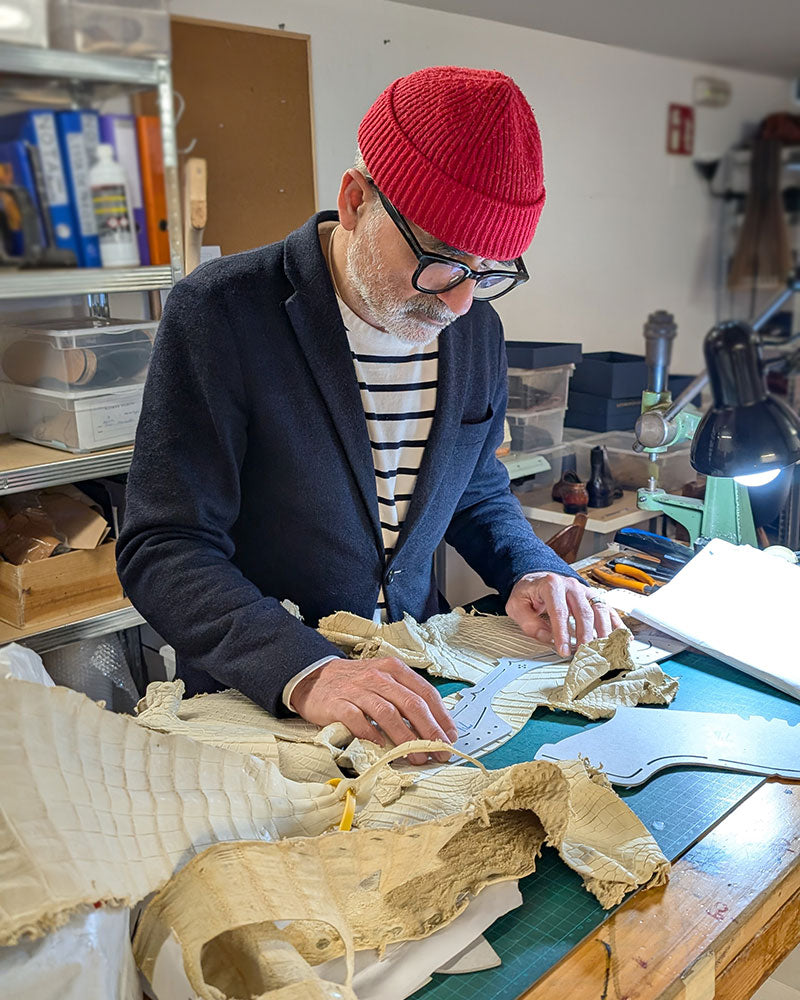
Leather Selection and Cutting
Only the most consistent sections of each hide are used.
Our shoemakers inspect every piece of leather for density, flexibility, and visual uniformity. Areas with imperfections are rejected, even when they would be acceptable in most premium footwear.
Cutting by hand allows us to orient each component to follow the natural grain of the leather. This improves durability and helps the shoe age gracefully over time.

Closing and Upper Construction
The individual components are stitched together to form the upper.
Precision at this stage is critical. Even a deviation of a few millimeters can affect symmetry and alignment once the shoe is lasted.
Details such as facings, seams, and broguing are positioned with long-term wear in mind, not simply initial appearance.

Hand Lasting
The upper is stretched over the last and shaped by hand.
This is one of the most demanding stages of shoemaking. The leather must be pulled evenly to avoid tension points while achieving a clean, sculpted form.
Proper lasting determines:
• How the shoe holds its shape
• How it conforms to the foot
• How it will look after years of wear
A well-lasted shoe develops character over time instead of collapsing.
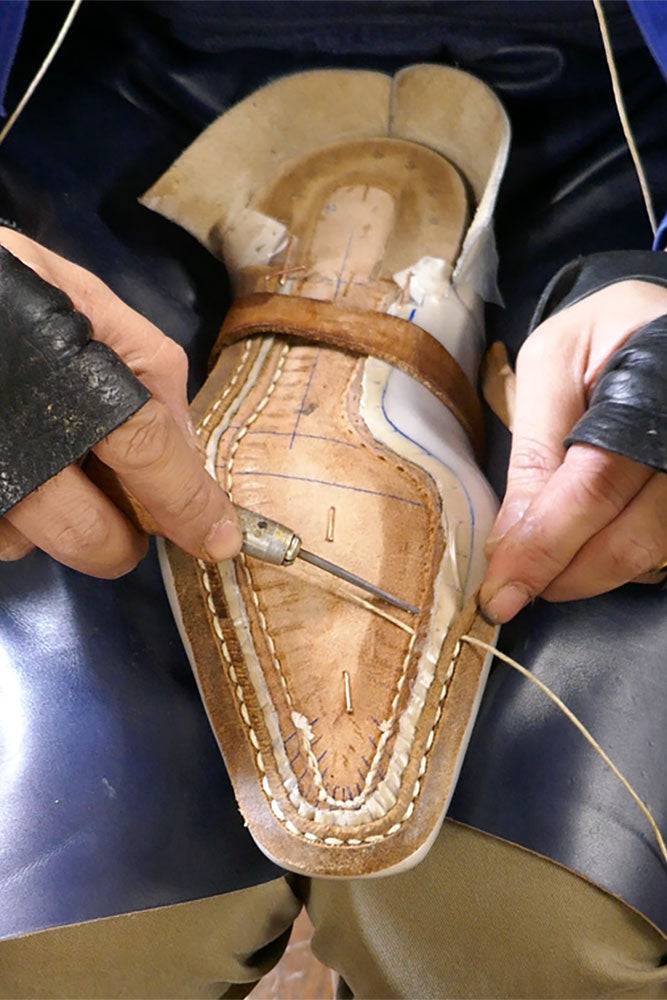
Hand Welting and Sole Construction
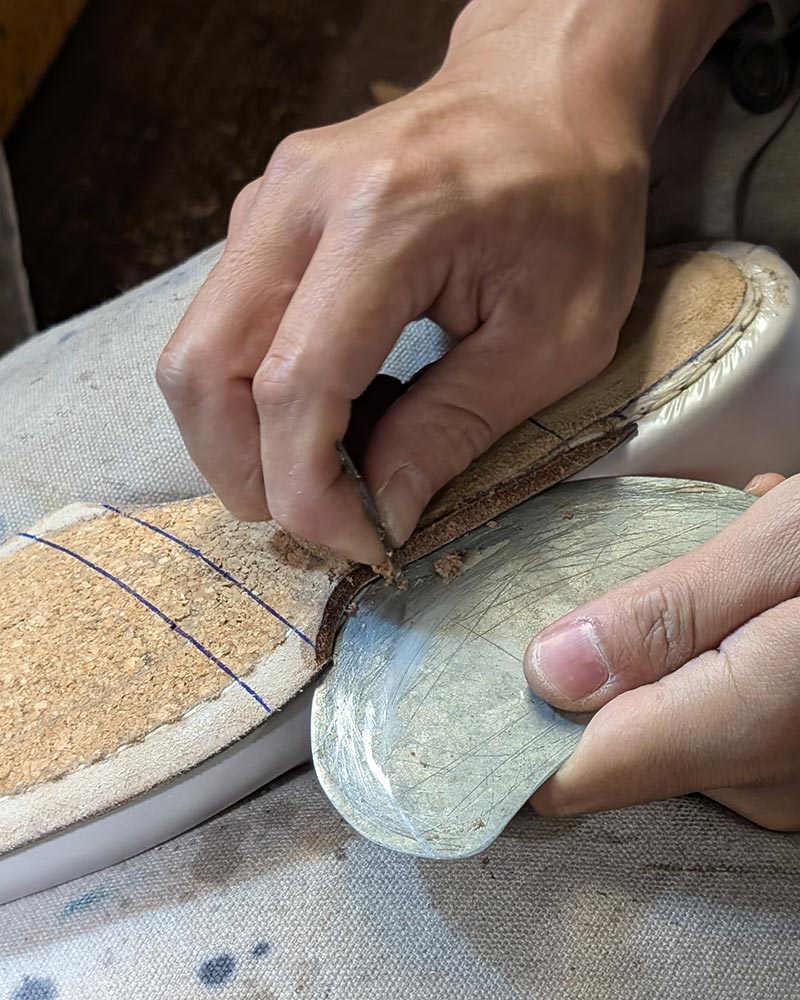
The welt is attached by hand to the upper and insole, creating the foundation of the shoe.
This method allows the sole to be replaced repeatedly without damaging the upper, significantly extending the lifespan of the shoe.
Multiple layers of leather are shaped, stitched, and finished to achieve both durability and elegance.
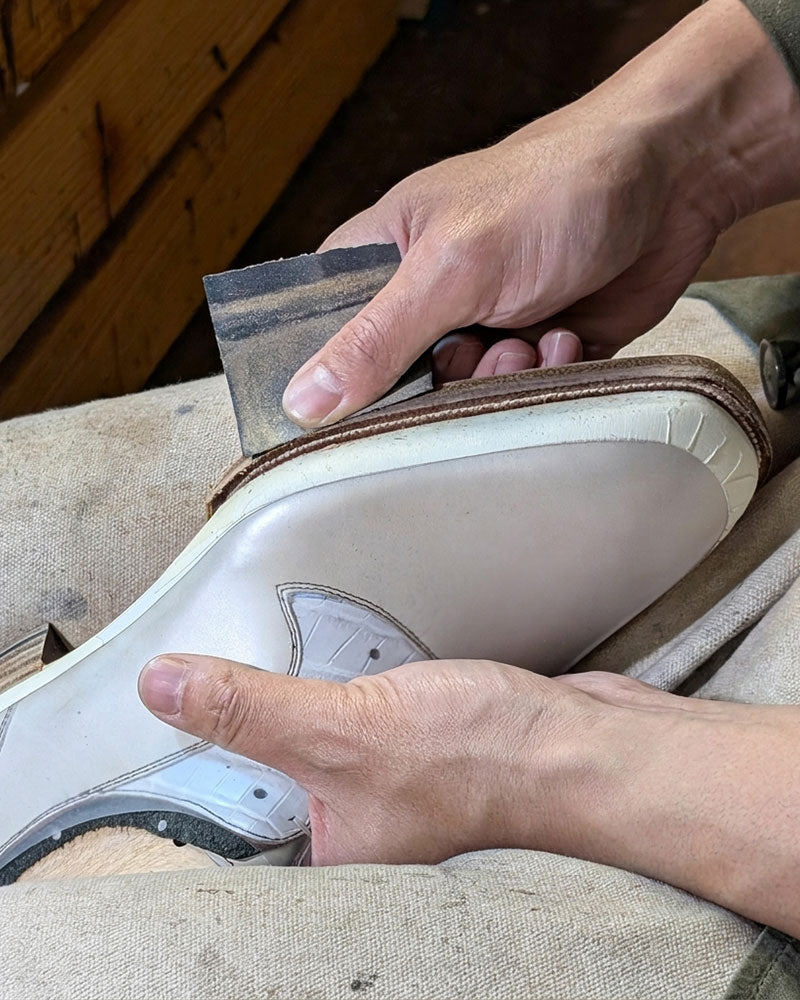
Hand Finishing and Patina
The final stage transforms the shoe into a finished object.
Edges are shaped and polished. The waist is refined. The leather is conditioned and finished by hand.
When a patina is applied, color is built gradually in translucent layers to create depth rather than surface coating. The result is a finish that evolves with wear instead of fading.

CONCLUSION
The 1202 Heritage Collection is not defined by decoration or logos. Its value lies in the time, skill, and restraint required to produce something that appears effortless.
For clients who appreciate craftsmanship, understanding this process often changes how they view footwear entirely.
These shoes are made to be worn for decades, not seasons.